File:SB826-40001o.jpg
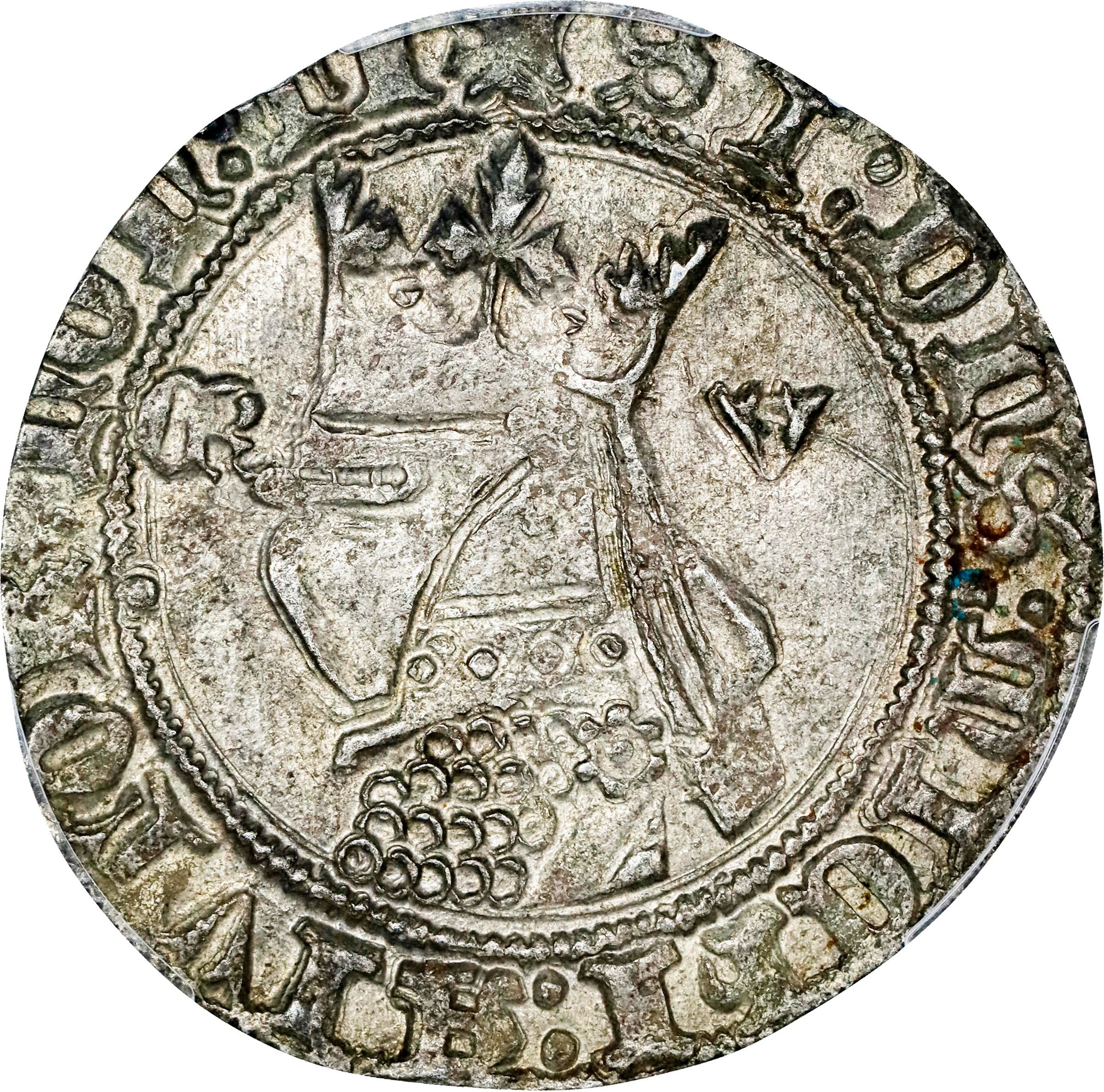


Original file (2,400 × 2,375 pixels, file size: 1.25 MB, MIME type: image/jpeg)
This specimen was lot 40001 in Stack's Bowers Summer 2026 Global Showcase Auction (Pittsburgh, August 2026), where it sold for $3,904. The catalog description[1] noted, "PORTUGAL. Barbuda, ND (1370-71)-CR V. Coruna Mint. Ferdinand I. PCGS MS-62. Gomes-Fe.48.03 (this coin plated). A most pleasing Mint State representative, offering bold details, and charming retained luster, with the full intriguing design being well struck and unblighted by handling."
This specimen was lot 40002 in Stack's Bowers Summer 2026 Global Showcase Auction (Pittsburgh, August 2026), where it sold for $1,342. The catalog description[1] noted, "PORTUGAL. Real Branco, ND (1438-81). Lisbon Mint. Alfonso V. PCGS AU-55. Gomes-A5.17.06 (this coin plated). Modestly handled and RARE in this condition, offering pleasing details and only the lightest instances of circulation."
This specimen was lot 40003 in Stack's Bowers Summer 2026 Global Showcase Auction (Pittsburgh, August 2026), where it sold for $1,220. The catalog description[1] noted, "PORTUGAL. Real Branco, ND (1438-81). Porto Mint. Alfonso V. PCGS EF-45. Gomes-A5.18.01. An appealing example of a type that is RARELY seen without damage, this example provides bold details and deep complexion."
This specimen was lot 40005 in Stack's Bowers Summer 2026 Global Showcase Auction (Pittsburgh, August 2026), where it sold for $7,320. The catalog description[1] noted, "PORTUGAL. 500 Reis, ND (1560-78). Lisbon Mint. Sebastiao I. PCGS AU-58. Fr-38; Gomes-SE.62.01 (this coin plated). A lovely and nearly Mint State example of this RARE type, yielding a bold strike and shimmering lustrous brilliance. Seldom encountered at all, doubly so in this immensely charming condition; we expect fierce competition for this example."
This specimen was lot 40007 in Stack's Bowers Summer 2026 Global Showcase Auction (Pittsburgh, August 2026), where it sold for $2,928. The catalog description[1] noted, "PORTUGAL. Tostao, ND (1621-40)-LB. Lisbon Mint. Philip III. PCGS AU-58. KM-17; Gomes-F3.12.06 (this coin plated). A lovely nearly Mint State specimen, with bold details and rich pleasing lustrous appeal."
This specimen was lot 40009 in Stack's Bowers Summer 2026 Global Showcase Auction (Pittsburgh, August 2026), where it sold for $3,660. The catalog description[1] noted, "PORTUGAL. 500 Reis, ND (1698). Pedro II. PCGS EF-40; Countermark: AU Details. KM-438.3; Gomes-P2.117.01. Issued by decree of 14 June 1698. Countermark: Bifacial legend overstrike. Applied to an undated Porto, Portugal 400 Reis (Cruzado) of Joao IV with previous crown 500 within shaped indent by decree of 22 March 1663. This nicely preserved example displays lovely rich slate patina with a slight iridescent sheen. The legend overstrike is deeply impressed leaving little evidence of the original designs. While the previous crowned 500 is somewhat uneven and further distorted from the later application around the legend. A pleasing example of the type that clear sat for a prolonged period of time undisturbed lending to its originality and good eye appeal."
This specimen was lot 40012 in Stack's Bowers Summer 2026 Global Showcase Auction (Pittsburgh, August 2026), where it sold for $1,098. The catalog description[1] noted, "PORTUGAL. Mint Error -- Double Struck -- 10 Reis, 1800. Lisbon Mint. Joao as Prince Regent. PCGS MS-62 Brown. KM-327. Already an intriguing coin on account of its advanced state of preservation, this SCARCE stunner is made all the more desirable due to its bold multiple striking."
This specimen was lot 40027 in Stack's Bowers Summer 2026 Global Showcase Auction (Pittsburgh, August 2026), where it sold for $7,930. The catalog description[1] noted, "Extremely Rare Dated Escudo from Toledo. SPAIN. Cob Escudo, 1596-T C. Toledo Mint. Philip II. NGC MS-61. cf. Fr-178 (without date); Cal-Unlisted (type 234). Weight: 3.28 g. An exceptional RARITY, this wonderful specimen displays a full, clear date, setting it apart and making it an incredible opportunity for the specialist. Though the flan is split, this is rather common for the manner of manufacture, and does not in any way interfere with its allure and overall appearance. Vibrant and lustrous, and a stunning survivor at this coveted Mint State level."
This specimen was lot 40032 in Stack's Bowers Summer 2026 Global Showcase Auction (Pittsburgh, August 2026), where it sold for $13,420. The catalog description[1] noted, "SPAIN. Cob 8 Escudos, 1647-R. Seville Mint. Philip IV. NGC AU Details--Cleaned. Fr-200; KM-59.2; Cal-1966. Weight: 26.26. Despite the unfortunate cleaning, this 8 Escudos provides bold details and a partial date. Appealing and presentable, despite its faults."
This specimen was lot 40037 in Stack's Bowers Summer 2026 Global Showcase Auction (Pittsburgh, August 2026), where it sold for $23,180. The catalog description[1] noted, "Exceptionally Rare 2 Escudos from the First Year in the Reign of Philip IV. SPAIN. Cob 2 Escudos, 1621-MD V. Madrid Mint. Philip IV. NGC AU-58. Fr-205 (date unlisted); KM-51.2 (date unlisted); Cal-1772 (this coin illustrated). Weight: 6.73 g. Very sharply struck across both sides, this stunning example remains EXTREMELY RARE and tantalizing, with the date unlisted in both Friedberg and KM, and with this very piece serving as the plated example in Calico. Mostly golden-yellow in hue, with some deeper toning evident surrounding the devices in a wondrous manner. Ex: Aureo & Calico 294 (5/2017) Lot # 338."
The third specimen was lot 40042 in Stack's Bowers Summer 2026 Global Showcase Auction (Pittsburgh, August 2026), where it sold for $14,460. The catalog description[1] noted, "SPAIN. 8 Escudos, 1701-S M. Seville Mint. Philip V. NGC AU-58. Fr-247; KM-259; Cal-158. Type 1. Variety with dots at fleece. Very nearly Mint State, this exceedingly appealing and enthralling example provides an elegant, well centered strike, hints of brilliance among the protected areas, and only a subtle degree of gentle wear across the high points. Just one has been observed finer in the NGC census."
The second specimen was lot 40044 in Stack's Bowers Summer 2026 Global Showcase Auction (Pittsburgh, August 2026), where it sold for $15,860. The catalog description[1] noted, "Exceptional Near-Mint 8 Escudos from Seville. SPAIN. 8 Escudos, 1703-S J. Seville Mint. Philip V. NGC AU-58. Fr-247; KM-260; Cal-160. Displaying just the subtlest degree of gentle wear, this near-Mint stunner retains excellent flair and originality, with a good deal of brilliance evident throughout and an appealing golden-orange hue across the surfaces. With just five observed finer in the NGC census, it is clear that the present piece offers an elevated appearance that should allow it much interest from enthusiastic bidders."
This specimen was lot 40071 in Stack's Bowers Summer 2026 Global Showcase Auction (Pittsburgh, August 2026), where it sold for $13,420. The catalog description[1] noted, "BOLIVIA. Cob 7-1/2 Reales, ND (1651-52)-P. Potosi Mint. Philip IV. NGC AU-50; Countermark: AU Standard. KM-C19.8; Cal-1488; Mastalir-5aa-a. Weight: 28.53 g. Variety with low G and flat oval crown. A difficult issue in this quality, with a nearly complete shield and cross and a clear mint mark, assayer, and denomination. The countermark is bold and clear with a nearly complete beaded border."
The second specimen was lot 40072 in Stack's Bowers Summer 2026 Global Showcase Auction (Pittsburgh, August 2026), where it sold for $7,930. The catalog description[1] noted, "BOLIVIA. "Royal" Presentation Cob 8 Reales, 1683-P V. Potosi Mint. Charles II. NGC EF Details--Plugged. KM-R26; Cal-679. Weight: 26.68 g. Despite being plugged in its rather ubiquitous hole for the type, this elegantly produced crown stands as a VERY RARE and desirable type. Well centered and only evenly circulated, this example offers the level of craftsmanship for which the "royal" types are known, and does so with great flair and beauty."
The second specimen was lot 40073 in Stack's Bowers Summer 2026 Global Showcase Auction (Pittsburgh, August 2026), where it sold for $17,080. The catalog description[1] noted, "BOLIVIA. "Royal" Presentation Cob 8 Reales, 1742-P P. Potosi Mint. Philip V. NGC EF Details--Holed. KM-31A; Cal-1513; Lazaro-296 (same obverse die). Weight: 26.81 g. A stunning and VERY RARE presentation striking. Perfectly round with all central marks displayed clearly, as expected of a Royal. Holed at 12 o'clock, as is almost ubiquitous for these issues, but otherwise wonderful surface quality accented by an elegant cabinet tone."
This specimen was lot 40074 in Stack's Bowers Summer 2026 Global Showcase Auction (Pittsburgh, August 2026), where it sold for $2,196. The catalog description[1] noted, "BOLIVIA. 2 Escudos, 1779-PTS PR. Potosi Mint. Charles III. PCGS VF-35. Fr-4; KM-57; Cal-1655. A RARE and seldom encountered type, this wholesome example displays a minimum of handling and remains enticingly original, and stands as the only representative in the PCGS census."
This specimen was lot 40103 in Stack's Bowers Summer 2026 Global Showcase Auction (Pittsburgh, August 2026), where it sold for $9,760. The catalog description[1] noted, "Tantalizing 2 Cents Pattern for the West Indies, BRITISH WEST INDIES. Copper 1/50 Dollar (2 Cents) Pattern, 1823. London Mint. George IV. PCGS PROOF-66 Red Brown. KM-Pn5; Prid-15. Struck for use in Sierra Leone, Mauritius, and the West Indies. Standing as the only such example of the type in the PCGS census, this highly appealing and enchanting Superb Gem provides even red-brown hues, some wondrous brilliance enlivening the fields, and an exquisite strike. No doubt among the finest known for the type that one will ever have the chance to encounter. As such, an EXTREMELY RARE specimen, and one that shall generate immense interest. From the Charles “Cheech” Litman Collection."
This specimen was lot 40104 in Stack's Bowers Summer 2026 Global Showcase Auction (Pittsburgh, August 2026), where it sold for $5,856. The catalog description[1] noted, "BRITISH WEST INDIES. Copper 1/100 Dollar (Cent) Pattern, 1823. London Mint. George IV. PCGS PROOF-65 Red Brown. KM-Pn4; Prid-17. Struck for use in Sierra Leone, Mauritius, and the West Indies. Quite sharp and elegantly rendered, this Gem proof striking offers rather even tan-brown hues and elegant luster, all while the surfaces stand as exceptionally pristine and enticing. The only such example of the type observed in the PCGS census among the Red Brown designation. From the Charles “Cheech” Litman Collection."
This specimen was lot 40138 in Stack's Bowers Summer 2026 Global Showcase Auction (Pittsburgh, August 2026), where it sold for $4,392. The catalog description[1] noted, "COLOMBIA. 8 Escudos, 1760-PN J. Popayan Mint. Charles III (in the name of Ferdinand VI). PCGS Genuine--Cleaned, EF Details. Fr-16 (Rare); KM-32.2; Cal-798; Onza-613; Restrepo-26.6. A RARE posthumous issue bearing the titles of Ferdinand VI, issued during the first year of coinage issued under Charles III at the Popayan Mint. Exhibiting some evidence of cleaning as noted, but not overly offensively so, the hairlines scattered and not especially concentrated. Some reddish toning has begun to develop, and a bold strike reveals ample detail despite the noted wear. From the Charles “Cheech” Litman Collection."
This specimen was lot 40167 in Stack's Bowers Summer 2026 Global Showcase Auction (Pittsburgh, August 2026), where it sold for $1,830. The catalog description[1] noted, "COLOMBIA. 2 Centavos, 1922. PCGS Genuine--Scratch, VF Details. KM-198; Restrepo-354.5. This EXTREMELY RARE year stands as the undisputed KEY DATE of the issue, with Krause reporting merely 10 known pieces. Most likely struck at the Denver mint, it seems that production of this denomination was meant to cease at the end of 1921, for a pause that would last until 1933. As such, it stands as a trophy item for collectors of the modern Colombian series, and one which diligent collectors may wait decades before finding available for sale. This example appears to have circulated extensively, accruing some earthen deposits and scratches along the way. Condition, however, is hardly a factor when it comes to items of this immense scarcity."
This specimen was lot 40177 in Stack's Bowers Summer 2026 Global Showcase Auction (Pittsburgh, August 2026), where it sold for $390,400. The catalog description[1] noted,
"Unique Curacao Countermarked 12,800 Reis, CURACAO. Curacao - Brazil. 180 Reaals, ND (ca. 1815). PCGS VF-20; Countermark: AU Details. Fr-Not listed; cf. Prid-pg. 250 Fig. 24; cf. Gordon-14b (same stamps); cf. Sch-1367b (same stamps). Weight: 20.58 g. Issued by local ordinance of 1815. Countermark: "CH" within serrated border, "⨁" (cross) on obverse, and "●" (test punch) on reverse. Applied to heavily clipped and re-edged 1728-R Brazil 12,800 Reis of Joao V (KM-140), with previous edge countermarks, "G+I", "L", "MH" and bi-facial "Br" (obverse) & "W" (reverse), issued by local ordinance of Governor J.K. Lauffer circa 1796-1803. An extraordinarily rare piece that is probably UNIQUE. This highly interesting issue is one of the rarest countermarked gold coins of the West Indies. To our knowledge, there are about 6 examples of either the five- or six-stamp varieties on 6,400 Reis, with the present piece being a recently discovered example on the only known 12,800 Reis host for this island, bringing the total to 7 known countermarked gold coins. Each of the countermarks are boldly applied and easily identifiable on a moderately worn host. The surfaces are a bit bright, displaying a pale yellow gold coloration with hints of sunset hues in the protected areas. Minor marks and abrasions with a few thin, shallow scratches that are noticed, but nothing of any significance or distracting. Truly a remarkable piece from the West Indies series with few known issues utilizing this large size gold denomination, 12,800 Reis, as a host. An amazing issue that is destined for an advanced collection of the highest caliber. The opportunity to acquire newly discovered West Indies issues does not occur often and should be given serious consideration for the chance to obtain such a marvelous piece.
Known examples:
6,400 Reis:
1) Five-Stamp variety, Gordon-14a (plate coin), countermarks applied to a 17x4-R 6,400 Reis (Joe) forgery, 10.47 g. Ex: Edward Roehrs; Ex: R. C. Gordon; Ex: R. J. Ford.
2) Five-Stamp variety, Gordon-14a, countermarks applied to a 17x6-R 6,400 Reis (Joe). Recently discovered in Europe.
3) Five-Stamp variety, Gordon-103 (plate coin), countermarks applied to a 1788 6,400 Reis (Joe), 11.66 g. With additional stamps of St. Vincent (August 1798) and Grenada (July 1798). Ex: Edward Roehrs; Ex: R. J. Ford.
4) Six-Stamp variety, cf. Gordon-14b, countermarks applied to a 1769-R 6,400 Reis (Joe). 12.12 g. Private Collection.
5) Six-Stamp variety, Gordon-14b (plate coin) Sch-1367b (plate coin), countermarks applied to a 1776-R 6,400 Reis (Joe) forgery, 10.43 g.
6) Six-Stamp variety, Gordon-14c (listed, not plated); Prid-Fig. 24 (plate coin); Sch-1367a (plate coin), countermarks applied to a 1781 6,400 Reis (Joe), 12.35 g. Ex: Fonrobert Collection (1878); Ex: Peltzer Collection (1927); Ex: Eliasberg (2005).
12,800 Reis:
7) Six-Stamp variety, cf. Gordon-14b (same stamps); cf. Sch-1376b (same stamps), countermarks applied to a 1728-R 12,800 Reis, 20.58 g. Recently discovered (present piece).
By comparison it is easy to see the disparity of known surviving examples of Joes (6,400) to double Joes (12,800) that were regulated to circulate in the West Indies. For Curacao alone we now see a 6:1 ratio, but when compared to other islands that ratio becomes even larger, perhaps 50:1 or 100:1. For all known regulated gold in the Islands that utilized Portuguese Joes, very few are known to have used the massive double Joe (12,800). In fact, to our knowledge only the two most common issues, Martinique (1805) and Grenada (1798), which can be found as a single island or multiple island countermark, are only known to have a couple documented examples each. Further elevating the rarity of such an unusual large format gold coin.
For decades, this series of West Indies countermarked gold was a mystery to numismatists with little or no documentation known to collectors outside the Netherlands. Some early scholars merely attributed them to the West Indies without any indication of the issuing authority or date of issuance. It wasn't until Scholten wrote in his book "The coins of the Dutch Overseas Territories 1601-1948", published in Amsterdam in 1953, that some light was shed on these special pieces, and the picture became clearer. According to Scholten, who cites an unnamed Dutch source (most likely a 1913 article by Mr. G. J. Fabius published in the Dutch publication "De Economist"), the first lightweight Joes (6,400 Reis) began appearing in 1793. The local Government, under the direction of Governor Johannes de Veer, took what appeared to be appropriate action by affixing a single stamp to authorize their circulation, but this did not last long. Gresham's Law dictates that bad money drives out good, and soon the lightweight coins in circulation on Curacao were not accepted elsewhere in the Caribbean. Towards the end of the century, at the direction of Governor Lauffer, each Joe was to be stamped five times near the edge ["G+I", "L", "MH" and bi-facial "Br" (obverse) & "W" (reverse)], and provided with a bank certificate of authenticity.
Near the end of the British occupation (1800-03 and 1807-16), the subject of lightweight coinage again became an issue of contention with the local government. The quality of Joes had been steadily declining to the point where they were only 35-36% of the legal value. Then in 1815 action was taken and these lightweight Joes were now subject to new counterstamping ["CH" within serrated border, "⨁" (cross) on obverse, and "●" (test punch) on reverse] making them current at the old rate of 90 Reaals per Joe. After the Dutch regained control of the island, lightweight and counterfeit Joe's, as well as the lack of smaller denominations, remained a problem. The local population began to refuse both genuine and counterfeit Joes. To remedy the problem once and for all, the government took action to withdraw all counterfeit, underweight, and poor quality Joes from circulation. The public could present their Joe's for verification in early 1819, and 26,906 Joes were presented. Of these, 15,858 were deemed to be of poor quality, and were withdrawn and exchanged for a paper certificate. These certificates would eventually be exchanged for new coins, paid for by a temporary increase in certain taxes. The 'good' Joes remained in circulation, but eventually all disappeared, mostly melted for their gold value, which explains their rarity today."
This specimen was lot 40178 in Stack's Bowers Summer 2026 Global Showcase Auction (Pittsburgh, August 2026), where it sold for $2,684. The catalog description[1] noted, "DANISH WEST INDIES. 4 Daler (20 Francs), 1904. Copenhagen Mint. Christian IX. PCGS MS-65. Fr-2; KM-72. A staggering and highly impressive Gem example that radiates with an alluring prooflike nature across both sides. Surpassed in the PCGS census by just one other."
This specimen was lot 40394 in Stack's Bowers Summer 2026 Global Showcase Auction (Pittsburgh, August 2026), where it sold for $3,660. The catalog description[1] noted, "MEXICO. Aguascalientes. 5 Centavos, 1915. NGC MS-62 Brown. KM-604.1; GB-15. Variety with plain edge and large vertically-shaded '5'. A RARE variety, especially in this problem-free Mint State, with pleasing chocolate-brown surfaces and an even, satisfactory strike."
This specimen was lot 40399 in Stack's Bowers Summer 2026 Global Showcase Auction (Pittsburgh, August 2026), where it sold for $9,150. The catalog description[1] noted, "MEXICO. Chihuahua. Copper 5 Centavos Pattern, 1915-MS. NGC MS-63 Brown. KM-Pn5; GB-59 (this coin plated). The plate coin in Guthrie-Bothamley for this intriguing and well-made type that is described within as "undoubtedly a pattern" due to the lack of a prominent die flaw to the left of the eagle's neck, which appears on 1914-dated coins struck with the same die. The conclusion is thus that these pieces were struck prior to the 1914 coins, presumably during planning for the 1915 design. The unusual Roman numeral denomination and relatively fine manufacture would seem to support this theory."
This specimen was lot 40414 in Stack's Bowers Summer 2026 Global Showcase Auction (Pittsburgh, August 2026), where it sold for $6,710. The catalog description[1] noted, "MEXICO. Aztec Calendar Silver 100 Pesos (Kilo), 2025-Mo. Mexican (San Luis Potosi) Mint. PCGS PROOFLIKE-69. KM-921. Mintage: 60. A great contemporary RARITY, this massive issue resides at the cusp of perfection and includes the original box of issue, along with wooden case for display purposes, loupe, and certificate of authenticity."
This specimen was lot 41274 in Stack's Bowers Summer 2026 Global Showcase Auction (Pittsburgh, August 2026), where it sold for $8,540. The catalog description[1] noted, "GREAT BRITAIN. Anglo-Saxon. Kings of All England. Penny, ND (946-955). Uncertain North-Western Mint; Aethelwald, moneyer. Eadred. NGC MS-62★. S-1118; N-707. Weight: 1.40 g. North-Western style dies. Obverse: Small cross, "EADRED REX" around; Reverse: "EDEL PALD" separated by three small crosses, rosettes above and below. An EXCEPTIONALLY RARE type from an elusive ruler and in astounding condition to boot, deservedly assigned the coveted "Star" by NGC for the deeply toned surfaces, bold strike, wonderful centering, and neat style. Quite possibly the finest example one could hope to acquire of this fleeting issue. Ex: Samuel Birchall (1761-1814) Collection."
This specimen was lot 41276 in Stack's Bowers Summer 2026 Global Showcase Auction (Pittsburgh, August 2026), where it sold for $1,952. The catalog description[1] noted, "GREAT BRITAIN. Anglo-Saxon. Kings of All England. Penny, ND (ca. 1040-42). Thetford Mint; Leofwine, moneyer. Harthacnut. PCGS AU-55. S-1169; N-799. Arm and Scepter (BMC xvii) type. A fairly crisply struck example of the type, this lightly circulated specimen offers alluring deep gray toning."
This specimen was lot 41277 in Stack's Bowers Summer 2026 Global Showcase Auction (Pittsburgh, August 2026), where it sold for $1,342. The catalog description[1] noted, "GREAT BRITAIN. Anglo-Saxon. Kings of All England. Penny, ND (ca. 1040-42). Lund (in Denmark) Mint; Garfine, moneyer. Harthacnut. PCGS Genuine--Peck Marked, Unc Details. S-1170. A sharply struck specimen, this otherwise Mint State example offers alluring toning and intense crispness across both sides, with the noted peck marks being the only such distraction, albeit rather minor."
This specimen was lot 41278 in Stack's Bowers Summer 2026 Global Showcase Auction (Pittsburgh, August 2026), where it sold for $1,830. The catalog description[1] noted, "GREAT BRITAIN. Anglo-Saxon. Kings of All England. Penny, ND (ca. 1062-65). London Mint; Swetman, moneyer. Edward the Confessor. PCGS MS-61. S-1183; N-830. Facing Bust/Small Cross (BMC xiii) type. Very well centered for the type, this Mint State survivor offers appealing gunmetal gray toning with some delightful olive-yellow hues further accentuating portions of the devices. From the John P. Burnham Collection."
This specimen was lot 41280 in Stack's Bowers Summer 2026 Global Showcase Auction (Pittsburgh, August 2026), where it sold for $976. The catalog description[1] noted, "GREAT BRITAIN. Anglo-Saxon. Kings of All England. Penny, ND (ca. 1065-66). Stafford Mint; Godwine, moneyer. Edward the Confessor. PCGS MS-62. S-1184; N-831. Pyramids (BMC xv) type. Displaying some evidence of double striking, this Mint State survivor nevertheless presents steely gray surfaces that are delightfully offset by some alluring golden notes. From the John P. Burnham Collection."
This specimen was lot 41281 in Stack's Bowers Summer 2026 Global Showcase Auction (Pittsburgh, August 2026), where it sold for $5,856. The catalog description[1] noted, "GREAT BRITAIN. Anglo-Saxon. Kings of All England. Penny, ND (1066). London Mint; Leofsige, moneyer. Harold II. PCGS AU-55. S-1186; N-836. Pax (BMC i) type. Exceptionally attractive and enticing, this near-Mint stunner provides sharply struck devices and legends, and pairs these aspects with great metal quality and golden-gray toning. VERY RARE when encountered this attractive and enthralling."
This specimen was lot 41284 in Stack's Bowers Summer 2026 Global Showcase Auction (Pittsburgh, August 2026), where it sold for $1,830. The catalog description[1] noted, "GREAT BRITAIN. Penny, ND (ca. 1092-95). Chichester Mint; Brunman, moneyer. William II Rufus. PCGS VF-35. S-1260; N-853. Voided Cross (BMC iii) type. Though fairly weakly struck in a number of areas, this specimen from a lesser-encountered monarch still offers a pleasing appearance and enough detail for full attribution."
This specimen was lot 41285 in Stack's Bowers Summer 2026 Global Showcase Auction (Pittsburgh, August 2026), where it sold for $2,318. The catalog description[1] noted, "GREAT BRITAIN. Penny, ND (ca. 1095-98). London Mint; Bruning, moneyer. William II Rufus. PCGS AU-55. S-1261; N-855. Cross Pattee and Fleuree (BMC iv) type. A RARER type from a more difficult king, this near-Mint specimen glistens with a great deal of brilliance and just a hint of toning throughout."
This specimen was lot 41286 in Stack's Bowers Summer 2026 Global Showcase Auction (Pittsburgh, August 2026), where it sold for $1,037. The catalog description[1] noted, "GREAT BRITAIN. Penny, ND (ca. 1123). London Mint; Alfwine, moneyer. Henry I. PCGS EF-45. S-1275; N-870. Pellets in Quatrefoil (BMC xiv) type. Though some wear across the higher points is noted, this example otherwise offers a solid strike that is rather well centered. Additionally, the moneyer's name here appears with its full Latin ending, ALFPINVS, rather than its much more commonly-encountered shorter form. From the John P. Burnham Collection."
This specimen was lot 41291 in Stack's Bowers Summer 2026 Global Showcase Auction (Pittsburgh, August 2026), where it sold for $2,928. The catalog description[1] noted, "GREAT BRITAIN. Penny, ND (ca. 1150-54). Castle Rising Mint; Rodbert, moneyer. Stephen. PCGS EF-45. S-1281; N-879. Cross and Piles (BMC vi) type. Fairly deeply toned, this example from a RARER mint offers fairly clear legends and design aspects. From the John P. Burnham Collection."
This specimen was lot 41296 in Stack's Bowers Summer 2026 Global Showcase Auction (Pittsburgh, August 2026), where it sold for $17,690. The catalog description[1] noted, "Stunning Nearly-Gem Noble with a Bold Strike, GREAT BRITAIN. Noble, ND (1369-77). Calais Mint. Edward III. NGC MS-64. S-1521; Fr-98; N-1281. Weight: 7.74 g. A charming nearly-Gem Mint State exemplar, this Noble provides rich luster with a bold strike quality and an impressive character to the surfaces. About as appealing as examples of the type are likely to come. From the Uppergreen Cabinet of Numismatic Rarities."
This specimen was lot 41316 in Stack's Bowers Summer 2026 Global Showcase Auction (Pittsburgh, August 2026), where it sold for $7,930. The catalog description[1] noted, "GREAT BRITAIN. Unite, ND (1607). London Mint; mm: Grapes. James I. NGC MS-62. S-2619; Fr-234; N-2084; KM-45. Second coinage. Weight: 10.08 g. Though displaying some scattered striking weakness and a few marks, this example otherwise remains without any real evidence of wear and retains solid mint brilliance."
This specimen was lot 41321 in Stack's Bowers Summer 2026 Global Showcase Auction (Pittsburgh, August 2026), where it sold for $1,952. The catalog description[1] noted, "GREAT BRITAIN. Crown, ND (1605-06). London Mint; mm: Crown. James I. PCGS AU-50. S-2624; Fr-236; N-2090; KM-34. Second coinage. Weight: 2.49 g. Emanating from the opening years in the English reign of James I, this lightly circulated specimen offers a pleasingly centered strike with some glints of brilliance among the protected areas. From the Lucius S. Ruder Collection."
This specimen was lot 41327 in Stack's Bowers Summer 2026 Global Showcase Auction (Pittsburgh, August 2026), where it sold for $3,416. The catalog description[1] noted, "GREAT BRITAIN. Crown, ND (1621-23). London Mint; mm: Thistle. James I. NGC EF-45. S-2664; N-2120. Third coinage. Obverse: James, holding sword and reins, riding caparisoned horse trotting right; Reverse: Garnished square-topped coat-of-arms. The finest known example certified for the type. A beautifully preserved survivor, this specimen exhibits a bold strike and remarkably even wear. The surfaces are blanketed in a rich, deeply layered cabinet patina that lends the coin immense visual character and undeniable eye appeal. Possessing a completely original, unmolested appearance, this exceptional piece is guaranteed to capture the attention of advanced numismatists and ignite spirited competition on the auction floor."
This specimen was lot 41330 in Stack's Bowers Summer 2026 Global Showcase Auction (Pittsburgh, August 2026), where it sold for $6,100. The catalog description[1] noted, "GREAT BRITAIN. Crown, ND (1625-26). London Mint; mm: Cross Calvary. Charles I. PCGS AU-55. S-2753; KM-125; Dav-3761; N-2753. A most handsome and exceptionally engaging Crown, displaying nice precision in the details, with soft sullen gray color throughout. Evidence of circulation is light and seldom encountered, and this issue of Charles I certainly scores higher than most of the series as evidence by its place alone atop the PCGS population report."
This specimen was lot 41333 in Stack's Bowers Summer 2026 Global Showcase Auction (Pittsburgh, August 2026), where it sold for $1,342. The catalog description[1] noted, "GREAT BRITAIN. 1/2 Crown, ND (1633-34). London Mint; mm: Portcullis. Charles I. NGC AU-55. S-2771; N-2207. Weight: 15.00 g. Obverse: Crowned king on horseback left, holding sword; Reverse: Oval draped coat of arms flanked by CR. An exceptional survivor of this variety that is nearly always found with heavy surface wear. Overall well-struck, with solid detail to the king, horse, and coat of arms, and permeated by deep wholesome toning throughout."
The second specimen was lot 41336 in Stack's Bowers Summer 2026 Global Showcase Auction (Pittsburgh, August 2026), where it sold for $1,342. The catalog description[1] noted, "GREAT BRITAIN. Shilling, ND (1638-39). London Mint; mm: Anchor and B. Charles I. NGC AU-55. S-2859; KM-186; N-2305. Briot's Second Milled issue. Obverse: Crowned half-length bust left, value behind; Reverse: Cross moline over square-topped coat-of-arms. A charming About Uncirculated piece sporting an original appearance, with deep antique toning throughout. Better-struck than the average example of the type, with a relatively sharp portrait and only hints of adjustment marks visible."
This specimen was lot 41338 in Stack's Bowers Summer 2026 Global Showcase Auction (Pittsburgh, August 2026), where it sold for $12,200. The catalog description[1] noted, "GREAT BRITAIN. Unite (20 Shillings), 1645. Oxford Mint; mm: Plume. Charles I. PCGS Genuine--Edge Repaired, AU Details. S-2738; N-2389; Fr-259; KM-253. Weight: 9.00 g. Obverse: Small crowned half-length portrait of Charles I to left with elbow not visible, holding sword and short olive branch, value XX in field, legend around; Reverse: Declaration inscription in three-line scroll below three plumes, date below, legend around. An EXTREMELY RARE variety featuring a short bust and small olive branch, and only the second example we are able to find in public auction records spanning the last 25 years. Though the edge exhibits filing as noted, the obverse and reverse are free of any major surface detractions and appear nearly Mint State, with only a touch of wear on the high points and ample original luster remaining. From the Charles “Cheech” Litman Collection."
This specimen was lot 41367 in Stack's Bowers Summer 2026 Global Showcase Auction (Pittsburgh, August 2026), where it sold for $2,074. The catalog description[1] noted, "GREAT BRITAIN. Guinea, 1691. London Mint. William III & Mary II. PCGS Genuine--Ex Jewelry, VF Details. S-3427; Fr-305; KM-474.2. Elephant & Castle (Royal Africa Company) issue. Despite its former status as a jewelry piece, this example stands as a pleasing representative from a RARE and rather storied emission. From the Lucius S. Ruder Collection."
This specimen was lot 41403 in Stack's Bowers Summer 2026 Global Showcase Auction (Pittsburgh, August 2026), where it sold for $18,300. The catalog description[1] noted, "Nearly-Immaculate 2 Guineas of George II, GREAT BRITAIN. 2 Guineas, 1748. London Mint. George II. PCGS MS-62. S-3669; Fr-338; KM-589. Presenting resounding eye appeal and standing as the finer of just two observed for the year in the PCGS census, this nearly-Choice example radiates with immense flair and beauty. The strike is rather sharp and exacting, with a dazzling degree of vibrant brilliance populating each side. Meanwhile, the coloring presents as mostly straw yellow, with some burnished golden notes further highlighting and accentuating the devices. Taken together, these accolades make this stunner an important and VERY RARE piece that will not be overlooked. From the Richard Ader Collection."
This specimen was lot 41420 in Stack's Bowers Summer 2026 Global Showcase Auction (Pittsburgh, August 2026), where it sold for $13,420. The catalog description[1] noted, "GREAT BRITAIN. Gold Guinea Pattern, 1798. Soho (Birmingham) Mint. George III. PCGS PROOF-55. W&R-109 (R5); KM-Pn65. Weight: 8.31 g. By C. H. Küchler. A VERY RARE Pattern issue in gold, this type being far more frequently encountered in Gilt Copper or other compositions; we are able to find only four other examples in public auctions over the past 25 years, with the last example selling in 2018. Interestingly, all four of these other examples similarly display wear, suggesting that the full Pattern mintage may have made its way into circulation. Some luster is retained in the fields and protected areas of the present piece, with fairly intact detail to the reverse and a hint of reddish toning. From the Charles “Cheech” Litman Collection."
This specimen was lot 41454 in Stack's Bowers Summer 2026 Global Showcase Auction (Pittsburgh, August 2026), where it sold for $3,172. The catalog description[1] noted, "GREAT BRITAIN. Trade Tokens. Middlesex. Newgate. Copper 1/2 Penny Token, 1796. NGC MS-65 Brown. D&H-397. Plain edge. An intriguing "hangman" type, this specimen features three lifeless bodies hanging from the gallows. A haunting Gem and a spooky design that may induce more than a few numismatic nightmares."
This specimen was lot 41473 in Stack's Bowers Summer 2026 Global Showcase Auction (Pittsburgh, August 2026), where it sold for $70,150. The catalog description[1] noted, "Possibly Unique 1/2 Crown Struck in Gold, GREAT BRITAIN. Gold 1/2 Crown Pattern, 1824. London Mint. George IV. PCGS Genuine--Test Cut, Unc Details. W&R-256 (R7); cf. KM-695 (normal Proof issue); cf. S-3809 (normal Proof issue). An EXTREMELY RARE Pattern striking in gold, the first we can recall offering as such and indeed the only example we are able to find in our research. The coin is accompanied by a tag from The Coin Exchange that notes the piece as "possibly unique and formerly owned by George IIII"; we are unable to confirm the verity of these claims, though the gold composition is indeed suggestive of production for presentation to a VIP. Struck to razor-sharp relief, with strong frost to the portrait and pleasingly mirrored fields. The noted test cut is quite small and fairly unobtrusive, appearing at roughly 9 o'clock along the obverse rim. Other than this, there are no major surface defects, with only the scattered lines and marks one might expect to accompany a low Uncirculated grade. A PERHAPS UNIQUE opportunity for collectors to acquire a gold Pattern issue by William Wyon for what would become the 1825-29 1/2 Crown design. From the Charles “Cheech” Litman Collection."
This specimen was lot 41564 in Stack's Bowers Summer 2026 Global Showcase Auction (Pittsburgh, August 2026), where it sold for $2,074. The catalog description[1] noted, "GREAT BRITAIN. Pound, 2004. Llantrisant Mint. Elizabeth II. PCGS PROOF-69 Deep Cameo. S-J18; KM-1048B. Regional Bridge series: Forth Bridge. Mintage: 2,618. AGW: 0.5777 oz. Tied with just three others for the top spot in the PCGS census, this nearly-flawless example provides a majestic cameo nature. From the John P. Burnham Collection."
This specimen was lot 41565 in Stack's Bowers Summer 2026 Global Showcase Auction (Pittsburgh, August 2026), where it sold for $2,684. The catalog description[1] noted, "IRELAND. Sixpenny Groat, ND (ca. 1546-47). Henry VIII. PCGS VF-20; Countermark: VF Details. S-6484B; Coincraft-IH84D-070. Countermark: Four annulets. Applied to the obverse of an undated (1536-7) 1st Harp Issue Groat of Henry VIII & Jane Seymore (S-6473). This moderately worn issue displays rich mottled patina with a slight iridescent sheen that pops out when tilted in the light. The countermark is deeply impressed in the obverse field just below the "I" (Jane Seymore). A seldom encountered issue that is sure to excite many collectors for the opportunity to acquire such a rare and unusual issue. Colgan suggests in "For Want of Good Money" that these countermarks might be the result of a later value reduction from Sixpenny Groat to a Fourpence during the reign of Edward VI. During the waning years of Henry VIII's reign, the silver coinage of his kingdom had become so debased that the country was in financial ruin. Officials, soldiers and locals found the debased coinage to be insufficient to keep up with inflation and that the earlier coinage of good silver was becoming increasingly important. It is theorized that the application of these countermarks was to denote good silver from bad. As such these issues should be considered EXTREMELY RARE and desirable."
This specimen was lot 41574 in Stack's Bowers Summer 2026 Global Showcase Auction (Pittsburgh, August 2026), where it sold for $2,806. The catalog description[1] noted, "SCOTLAND. Penny, ND (1306-29). Uncertain Mint, possibly Berwick. Robert the Bruce. NGC VF-35. S-5076. Obverse: Crowned bust left; scepter to left; Reverse: Long cross pattee; voided mullet of five points in each angle. A well circulated yet charming example of this popular hammered issue. Well centered with only a slight weakness on the reverse. From the Greyhound Collection."
This specimen was lot 41578 in Stack's Bowers Summer 2026 Global Showcase Auction (Pittsburgh, August 2026), where it sold for $1,464. The catalog description[1] noted, "SCOTLAND. 1/2 Testoon, 1560. Edinburgh Mint. Francis & Mary. NGC AU-58. S-5420. Weight: 3.00 g. Despite being struck on a somewhat irregularly-shaped flan, this SCARCER type offers a pleasing, well executed strike and some elegant toning that deepens nearer the peripheries."
- [{Scotland 1560 1/2 testoon]]
This specimen was lot 41585 in Stack's Bowers Summer 2026 Global Showcase Auction (Pittsburgh, August 2026), where it did not sell. The catalog description[1] noted, "SCOTLAND. Scotland - France. Perthshire. Deanston. Adelphi Cotton Works. 2 Shillings 6 Pence, ND (ca. 1785-94). PCGS VF-20; Countermark: VF Details. KM-CC23; Manville-24 (this piece listed). Issued by Adelphi Cotton Work. Countermark: Cotton-wool sack with legend around "ADELPHI COTTON WORK". Applied to the obverse of a 1759-W, Lillie Mint, France 1/2 Ecu of Louis XV (KM-516.21). This wholesome example displays light attractive gray tone with a slight iridescent sheen that pops out when tilted in the light. The countermark exhibits a bold central strike with portions of the legend in fields weak due to the device elevation and depth of the die. Wholly original looking and attractive, this RARE type features good eye appeal with plenty of remaining detail.
All whole half-dollar size countermarked Scottish merchant issues should be considered rare to EXTREMELY RARE with few surviving examples by comparison to whole dollar size coins or cut fractions thereof. According to Harrington Manville, he recorded just 25 different examples of the 2 Shillings 6 Pence of Adelphi Cotton Works countermarked half Ecus. Most are contained in long-term collections or institutes and are seldom encountered today. The discovery of the "1792 Day Book" of Adelphi Cotton Work by Eric Hodge gives us a more accurate time period in which these were issued based on the values associated with silver at the time of the day book. A highly interesting issue that is sure to catch the attention of many collectors. Ex: Baldwin's 6 (10/1995) Lot # 954."
This specimen was lot 41586 in Stack's Bowers Summer 2026 Global Showcase Auction (Pittsburgh, August 2026), where it did not sell. The catalog description[1] noted, "SCOTLAND. Scotland - Mexico. Uncertain, possibly Glasgow and Carrick Brown & Co. 5 Shillings, ND (ca. late 1790s). PCGS EF-45; Countermark: AU Details. KM-CCA39.2; Manville-50. Countermark applied to the obverse on a 1794-Mo FM Mexico 8 Reales of Charles IV. Possibly relating to the Glasgow-based firm of Carrick Brown & Co., this handsome and EXTREMELY RARE specimen, of which just two others are known, offers a wondrous overall appearance. Pleasingly toned around the devices, with host remaining exceptionally enticing and provocative. Ex: DNW 93 (9/2011) Lot # 1773."
This specimen was lot 41587 in Stack's Bowers Summer 2026 Global Showcase Auction (Pittsburgh, August 2026), where it sold for $9,150. The catalog description[1] noted, "Extensively Pedigreed Renfrewshire Countermark Issue, SCOTLAND. Scotland - Mexico. Renfrewshire, Greenock. Archibald King. 4 Shillings 6 Pence, ND (ca. 1820-25). PCGS VF-25; Countermark: AU Details. KM-CC56; Manville-55. Countermark applied to the obverse of an 1811-Mo HJ Mexico 8 Reales of Ferdinand VII. With a very boldly applied countermark, this VERY RARE specimen yields exceptional eye appeal with respect to both mark and host. Pleasingly toned and with great brilliance evident among the fields. Ex: DNW 113 (9/2013) Lot # 385. Ex: H. D. Gibbs Collection (Schulman - 11/1960) Lot # 345. Ex: H. M. Lingford Collection, Part I (Glendining - 10/1950) Lot # 760. Ex: F. S. Cokayne Collection (Glendining - 7/1946) Lot # 181. Ex: A. Thellusson Collection, Part I (Sotheby - 10/1931) Lot # 395 Ex: W. J. Davis Collection (Glendining - 7/1924) Lot # 112. Ex: W. Waite-Sanderson Collection (Glendining - 2/1923) Lot # 90."
This specimen was lot 41590 in Stack's Bowers Summer 2026 Global Showcase Auction (Pittsburgh, August 2026), where it did not sell. The catalog description[1] noted, "SCOTLAND. Scotland - Mexico. Renfrewshire, Port Glasgow. Robert Crighton. 4 Shillings 6 Pence, ND (ca. 1820). PCGS VF-35. KM-CC89; Manville-87. Countermark applied to the obverse and reverse of an 1807-Mo TH Mexico 8 Reales of Charles IV. Featuring a rather boldly applied countermark, this VERY RARE type displays a host that is only lightly circulated and toned a pleasing subtle hue. Ex: Dix Noonan Webb 43 (10/1999) Lot # 1097."
This specimen was lot 41591 in Stack's Bowers Summer 2026 Global Showcase Auction (Pittsburgh, August 2026), where it sold for $9,760. The catalog description[1] noted, "Extremely Rare Greenock Draper's Society Countermarked 8 Reales, SCOTLAND. Scotland - Mexico. 4 Shillings 6 Pence, ND (ca. 1808-19). PCGS VF-30; Countermark: EF Details. KM-CC53; Manville-54. Issued by Greenock Draper's Society. Countermark: "4/6" in triangle with parallel lines between sides and corded boarder, "GREENOCK DRAPER'S SOCIETY" around, all within beaded boarder. Applied to the obverse of an 1809-MoTH Mexico armored bust 8 Reales of Ferdinand VII (KM-110). This decently preserved example displays mottled slate gray patina with areas of richer coloration throughout and hints of iridescence in the protected areas, while the high point offer a pleasing dove gray coloration adding a bit of contrast. Though the countermark is deeply impressed and mostly bold, is a bit uneven with a small portion of the legend not struck up, yet there is no mistake whom issued this merchant mark. There is some irregular roughness around the edges mentioned for accuracy, but this is hardly a distraction due to the elusive nature of this issue. According to Manville there are only a few known examples of this issuer, two in institutional collections and a third untraced piece, making the present survivor a newly discovered example. An EXTREMELY RARE issue and only the second known piece in private hands which is sure to excite many collectors of the series for the chance to obtain such an unusual piece. Little is known of the Greenock Draper's Society, which is not listed in any of the directories cited by Manville. He proceeds to list other known societies from 1742-1825. He was aware of at least one informal meeting from August 1825 where it listed known Greenock Draper's, some of which issued merchant countermarks, but is limited on information. Clearly more research is needed by the specialist to fill in the missing information."
This specimen was lot 42018 in Stack's Bowers Summer 2026 Global Showcase Auction (Pittsburgh, September 2026), where it sold for $3,416. The catalog description[1] noted, "ANGOLA. 1/2 Macuta, 1785. Lisbon Mint. Maria I & Pedro III. PCGS MS-64 Red Brown. KM-28; Gomes-MP.02.01. A lovely near-Gem specimen offering pleasing retained Mint Red, general sharpness in the details, and alluring charm throughout."
This specimen was lot 42020 in Stack's Bowers Summer 2026 Global Showcase Auction (Pittsburgh, September 2026), where it sold for $10,370. The catalog description[1] noted, "ANNAM. Gold 5 Tien, ND (1820-41). Minh Mang. PCGS Genuine--Tooled, Unc Details. KM-188 var. (for silver strike, unlisted in gold); Sch-188 var. (same). Weight: 19.40 g. EXTREMELY RARE. One of just three examples that have been seen in auction in the past two decades."
This specimen was lot 42021 in Stack's Bowers Summer 2026 Global Showcase Auction (Pittsburgh, September 2026), where it sold for $34,160. The catalog description[1] noted, "Impressive Mint State Gold 3 Tien of Minh Mang, ANNAM. 3 Tien, Year 16 (1835). Minh Mang. NGC MS-61. Fr-4; KM-229; Sch-206D. Weight: 13.04 g. This gently handled and nicely preserved minor gold issue exhibits sharp design features with relatively smooth fields. A pleasing pale gold coloration accentuates the thin intricate dragon and characters. An seldom encountered issue in this problem free high state of preservation and should be considered RARE and highly desirable by quality conscious collectors."
This specimen was lot 42057 in Stack's Bowers Summer 2026 Global Showcase Auction (Pittsburgh, September 2026), where it sold for $5,002. The catalog description[1] noted, "AUSTRIA. 4 Ducats, 1908. Vienna Mint. Franz Joseph I. PCGS MS-62 Prooflike. Fr-487; KM-2276. AGW: 0.443 oz. A lovely Prooflike specimen that shimmers and sheens when held in the light, with only modest chattering consistent for the grade, and a rich bounty of unspoiled luster."
This specimen was lot 42078 in Stack's Bowers Summer 2026 Global Showcase Auction (Pittsburgh, September 2026), where it sold for $5,734. The catalog description[1] noted, "BOHEMIA. Rosenberg. Ducat, "87" (1587). Reichenstein (Zloty Stok) Mint. Wilhelm, as Governor and Lord. PCGS Genuine--Bent, EF Details. Fr-112; F&S-2505. Despite the moderate wear and noted issues, this remains an EXTREMELY RARE type for which this represents the first such occurrence in one of our sales. From the Charles “Cheech” Litman Collection."
This specimen was lot 42079 in Stack's Bowers Summer 2026 Global Showcase Auction (Pittsburgh, September 2026), where it sold for $28,060. The catalog description[1] noted, "Exquisite Budweis Taler on the Threshold of Superb Gem, BOHEMIA. Taler, 1600. Budweis (Ceske Budejovice) Mint; mm: Dog Head. Rudolf II. NGC MS-66+. Dav-8081; KM-MB-257. A staggering survivor and by far the finest certified of this already VERY RARE Bohemian issue hailing from the Budweis Mint (modern-day České Budějovice). Boasting a state of preservation that would be enviable for any Taler of this period, one is hard-pressed to find even minute flaws atop brilliant surfaces that are enveloped in fresh watery luster. Likely the finest example one could hope to acquire of the type, and a specimen that could easily serve as a centerpiece in a collection of either Bohemian or general Taler types."
This specimen was lot 42101 in Stack's Bowers Summer 2026 Global Showcase Auction (Pittsburgh, September 2026), where it sold for $18,300. The catalog description[1] noted, "Superlative 20 Cents Pattern with Reeded Edge & Medal Alignment, CANADA. Silver 20 Cents Pattern, 1871. London Mint. Victoria. PCGS SPECIMEN-66. KM-Pn8; DC-50A. Reeded edge. Variety with medal alignment. An exceptional RARITY that is made even more desirable on account of its exalted status and level of preservation, this Superb Gem glistens with intense beauty and flair, with razor sharp precision imparted unto the strike and wondrous brilliance emanating from the fields. Even more tantalizing, the surfaces are awash in dazzling iridescence, making this example no doubt among the finest known for the type, and an exceptionally important offering as such. From the Charles “Cheech” Litman Collection."
This specimen was lot 42150 in Stack's Bowers Summer 2026 Global Showcase Auction (Pittsburgh, September 2026), where it sold for $1,464. The catalog description[1] noted, "DENMARK. 3 Mark (1/4 Ducat), 1668. Copenhagen Mint. Frederik III. PCGS AU-53. Fr-129; KM-264.1; Hede-40A. A SCARCE gold type struck to a fractional Ducat denomination, this example does exhibit some scattered wear, but nevertheless remains rather charming and pleasing."
The second specimen was lot 42157 in Stack's Bowers Summer 2026 Global Showcase Auction (Pittsburgh, September 2026), where it sold for $5,490. The catalog description[1] noted, "EGYPT. Ottoman Empire. 5 Qirsh, AH 1277 Year 9 (1868/9). Cairo (Misr) Mint. Abdul Aziz. PCGS MS-65. KM-254. The sole finest graded example yet holdered by PCGS, this wonderful Gem provides sharp strike, rich luster, and boundless appeal. A perfect example for the specialist seeking only the best for their holdings."
This specimen was lot 42195 in Stack's Bowers Summer 2026 Global Showcase Auction (Pittsburgh, September 2026), where it sold for $8,540. The catalog description[1] noted, "FRANCE. Besancon. Pistolet, 1572. Besancon Mint. Free City, in the name of Charles V. NGC AU-58. Fr-74; KM-MB-32. Large Head variety. Obverse: Laureate bust right; Reverse: Imperial eagle with shield of city arms on breast. A RARE one-year variety with this style of portrait, and a relatively early dated gold type. Struck in the name of Charles V, Holy Roman Emperor, who granted the city the right to mint coinage on the condition that it bear his titles and portrait. An evocative issue bearing a classical portrait reminiscent of those upon Ancient Roman coinage, and VERY RARE in this problem-free near-Mint State condition, with a strong strike and little in the way of surface wear present."
This specimen was lot 42200 in Stack's Bowers Summer 2026 Global Showcase Auction (Pittsburgh, September 2026), where it sold for $1,342. The catalog description[1] noted, "FRANCE. Louis d'Or, 1701-O. Riom Mint. Louis XIV. NGC AU Details--Reverse Cleaned. Fr-436; KM-334.15; Gad-253. Emanating from a SCARCER mint, this slightly cleaned type is overstruck, as are all of the issues of the mint for this year. From the Empire State Collection."
This specimen was lot 42210 in Stack's Bowers Summer 2026 Global Showcase Auction (Pittsburgh, September 2026), where it sold for $1,708. The catalog description[1] noted, "FRANCE. Louis d'Or, 1749-&. Aix Mint. Louis XV. NGC AU-53. Fr-464; KM-513.27; Gad-341. A modestly handled example, with rich lustrous beauty and sharp details, with only light handling. From the Empire State Collection."
This specimen was lot 42219 in Stack's Bowers Summer 2026 Global Showcase Auction (Pittsburgh, September 2026), where it sold for $5,124. The catalog description[1] noted, "FRANCE. 2 Louis d'Or, 1788-K. Bordeaux Mint. Louis XVI. NGC MS-63. Fr-474; KM-592.8; Gad-363. Mintage: 18,000. A resounding Choice specimen of this Double Louis d'Or, and quite attractive for the issue. Some of the typical adjustment marks are evident over the central areas, but the eye-appeal is otherwise admirable, with swirling luster and only minute surface marks."
This specimen was lot 42221 in Stack's Bowers Summer 2026 Global Showcase Auction (Pittsburgh, September 2026), where it sold for $439.20. The catalog description[1] noted, "FRANCE. 1/10 Ecu, 1790/88-A. Paris Mint. Louis XVI. PCGS EF-40. KM-568.1; Gad-353 (R3). Though not mentioned on the holder, a charming overdate issue that is rather RARE and seldom encountered, especially in such a wholesome state of preservation as is the case here."
This specimen was lot 42270 in Stack's Bowers Summer 2026 Global Showcase Auction (Pittsburgh, September 2026), where it sold for $6,100. The catalog description[1] noted, "FRANCE. Gold Franc Piefort, 1972. Paris Mint. PCGS SPECIMEN-69. KM-P454. AGW: 0.7099 oz. A RARE gold Piefort issue hailing from a scant mintage of 75 pieces, approaching flawless quality and tied with a mere four other pieces as finest certified by PCGS. From the Charles “Cheech” Litman Collection."
This specimen was lot 42285 in Stack's Bowers Summer 2026 Global Showcase Auction (Pittsburgh, September 2026), where it did not sell. The catalog description[1] noted, "GERMANY. Anhalt-Zerbst. "Death" Taler, 1621. Zerbst Mint. Rudolf III. NGC AU-53. Dav-6027; KM-4. Commemorating the death of Rudolf. Lovely patina and, although worn in some spots, this example exhibits sharp detail and escapes the damage that is quite often seen on the type. From the Heisner Collection from Down Under. Ex: WAG Online 143 (10/2023) Lot # 261."
This specimen was lot 42286 in Stack's Bowers Summer 2026 Global Showcase Auction (Pittsburgh, September 2026), where it sold for $793. The catalog description[1] noted, "GERMANY. Augsburg. 60 Kreuzer, 1574. Augsburg Mint. NGC AU Details--Tooled. Dav-3; KM-MB62. Overall most marks on the surface are manufacturing marks from roller dies going in the same direction but, as stated, there are a few tooling marks around the legend. Nice dark patina highlighting the strong strike with lovely details and limited signs of handling. A RARE type that is desirable even with damage. From the Heisner Collection from Down Under. Ex: Gorny & Mosch 294 (3/2023) Lot # 1176."
This specimen was lot 42290 in Stack's Bowers Summer 2026 Global Showcase Auction (Pittsburgh, September 2026), where it sold for $4,636. The catalog description[1] noted, "GERMANY. Baden. Taler, 1868. Karlsruhe Mint. Friedrich I. NGC MS-65. Dav-531; KM-245. Despite merely receiving a Mint State surface designation, it is fairly clear that this crown presents superior eye appeal and craftsmanship than is generally encountered for the type, making it an undoubted cut above. Richly toned and alluring degree of iridescence, it should be highly coveted and intensely pursued. From the Charles “Cheech” Litman Collection."
This specimen was lot 42299 in Stack's Bowers Summer 2026 Global Showcase Auction (Pittsburgh, September 2026), where it sold for $1,159. The catalog description[1] noted, "GERMANY. Brandenburg-Ansbach. Taler, 1619. Furth Mint. Joachim Ernst. NGC EF-45. Dav-6226; KM-5. Overall pleasant surfaces with modest signs of handling and problem free surfaces. From the Heisner Collection from Down Under."
This specimen was lot 42304 in Stack's Bowers Summer 2026 Global Showcase Auction (Pittsburgh, September 2026), where it sold for $1,586. The catalog description[1] noted, "GERMANY. Brunswick-Wolfenbuttel. Taler, "96" (1596). Andreasberg Mint. Heinrich Julius. PCGS EF-40. Dav-9080; KM-MB274. Overall darker patina and decent a strike for the type with minimal signs of handling. A popular type on account of the design and SCARCITY of the type. From the Heisner Collection from Down Under."
This specimen was lot 42309 in Stack's Bowers Summer 2026 Global Showcase Auction (Pittsburgh, September 2026), where it sold for $2,684. The catalog description[1] noted, "GERMANY. Cologne. Taler, 1574. Deutz Mint. Salentin. NGC AU-50. Dav-9132; KM-MB246. A pleasing Taler with nice original surfaces and strong strike quality. RARE when encountered free of problems and retaining this much mint luster. From the Heisner Collection from Down Under."
The second specimen was lot 42323 in Stack's Bowers Summer 2026 Global Showcase Auction (Pittsburgh, September 2026), where it sold for $2,684. The catalog description[1] noted, "GERMANY. Hesse-Darmstadt. Taler, 1696-IAR GLC F. Giessen Mint. Ernst Ludwig. NGC EF-45. Dav-6810A; KM-94. Commemorating the yield of silver from the Gottesgabe mine in Roth. A RARE variant with IAR GLC F on the ground, this example only shows modest wear and has a pleasant gray patina. The surfaces retain a vast majority of the details on this handsome and seldom encountered type. From the Heisner Collection from Down Under. Ex: WAG 131 (6/2022) Lot # 1100."
This specimen was lot 42333 in Stack's Bowers Summer 2026 Global Showcase Auction (Pittsburgh, September 2026), where it sold for $1,952. The catalog description[1] noted, "GERMANY. Mainz. Ducat, 1652-MF. Mainz Mint. Johann Philipp von Schonborn. NGC MS-61. Fr-1656; KM-108. Weight: 3.42 g. A satisfying Mint State representative of this charming portraited type, with full luster gracing the surfaces and no signs of wear."
This specimen was lot 42336 in Stack's Bowers Summer 2026 Global Showcase Auction (Pittsburgh, September 2026), where it sold for $1,708. The catalog description[1] noted, "GERMANY. Mecklenburg. Taler, 1556. Grevesmuhlen Mint. Ulrich III. NGC EF-40. Dav-9549; KM-MB151. Lovely even strike with pleasant uniform patina, modestly handled on highpoints but still with attractive details. From the Heisner Collection from Down Under."
This specimen was lot 42351 in Stack's Bowers Summer 2026 Global Showcase Auction (Pittsburgh, September 2026), where it sold for $4,148. The catalog description[1] noted, "GERMANY. Oldenburg. 2/3 Taler, 1761-B. Oldenburg Mint. Friedrich V of Denmark. PCGS Genuine--Cleaned, AU Details. KM-122; Hede-2D. A RARE and seldom encountered type, this minor does exhibit some minor wear and cleaning as noted, but nevertheless yields charming color and retains solid detail."
This specimen was lot 42352 in Stack's Bowers Summer 2026 Global Showcase Auction (Pittsburgh, September 2026), where it sold for $2,440. The catalog description[1] noted, "GERMANY. Pfalz-Simmern. Taler, 1573. Heidelberg Mint. Friedrich III. NGC EF-45. Dav-9635; KM-MB158. Overall pleasant darker patina with hues of greenish gold with minimal signs of handling. From the Heisner Collection from Down Under."
This specimen was lot 42356 in Stack's Bowers Summer 2026 Global Showcase Auction (Pittsburgh, September 2026), where it sold for $1,830. The catalog description[1] noted, "GERMANY. Prussia. 20 Mark, 1877-A. Berlin Mint. Wilhelm I. PCGS MS-64. Fr-3816; KM-505; J-246. Tied with just one other for the top spot in the PCGS census, this near-Gem provides great eye appeal through its glistening straw yellow hue and dazzling luster."
This specimen was lot 42360 in Stack's Bowers Summer 2026 Global Showcase Auction (Pittsburgh, September 2026), where it sold for $2,135. The catalog description[1] noted, "GERMANY. Quedlinburg. Silver Medallic 1/4 Taler, 1704. PCGS MS-64. KM-76; Mehl-532. Commemorating the death of Anna Dorothea of Saxe-Weimar. Obverse: Bare head right; Reverse: Ship under sail right. Already a VERY RARE and seldom encountered type, this medallic minor presents intense cabinet toning paired with its advanced state of preservation. The finer of just two observed in the PCGS census."
This specimen was lot 42361 in Stack's Bowers Summer 2026 Global Showcase Auction (Pittsburgh, September 2026), where it did not sell. The catalog description[1] noted,
"Stunning 5 Ducats Commemorating the Foundation of the Church of the Holy Trinity, GERMANY. Regensburg. 5 Ducats, 1627. Free City. NGC MS-63+. Fr-2456a; cf. KM-58 (3 Ducats); cf. Plato-21/23 (silver Medal). Diameter: 42mm. Weight: 17.42 g. Obverse: Perspective view of the church, with angels to left and right, holding palm frond and olive branch, respectively; personified trinity among the clouds above; Reverse: Legend in seven lines within border of 16 coats-of-arms and initials of the Protestant councilors. A gorgeously engraved multi-Ducat issue struck in commemoration of the laying of the foundation stone of the Trinity Church on 4 July 1627, featuring a charming rendition of the planned church opposite a neat and symmetrical ring of coats of arms with a Latin distich on the Holy Trinity. The Dominican church of Regensburg, which had been jointly used by local Protestants and Dominicans since 1563, was returned to the Dominicans in 1626; subsequently, the Protestant city council made the decision to build a new Protestant church. Today, the Church of the Holy Trinity (St. Trinitatis) remains one of the most important Baroque landmarks of the city. An INCREDIBLE RARITY as an impressive 5 Ducats, with few examples arising to market in recent decades. Those that have been offered often feature wear, mounting, or holing, the present specimen an exception that may very well be the finest extant survivor of the type. Featuring an admirably Choice state of preservation for any multi-Ducat of this era, the watery surfaces glisten with resounding brilliance and feature a wonderfully sharp strike with a delightful frosty nature to the devices. A perhaps UNIQUE opportunity to acquire an example in such fine quality."
This specimen was lot 42363 in Stack's Bowers Summer 2026 Global Showcase Auction (Pittsburgh, September 2026), where it sold for $21,960. The catalog description[1] noted, "Stunning City View 2 Ducats, GERMANY. Regensburg. 2 Ducats, ND (ca. 1745-65). Franz I. PCGS AU-58. Fr-2537; KM-329. Featuring an elegantly engraved reverse that displays a veduta of Regensburg, this specimen provides even more ocular flair through its radiant tetragrammaton in the sky. The sole example of the type observed in the PCGS census, this piece abounds with golden-yellow hues and an exceptionally pleasing strike, all while an opulent array of luster further enlivens the fields. A stunning piece that should elicit a great deal of intrigue and interest when it crosses the auction block."
This specimen was lot 42369 in Stack's Bowers Summer 2026 Global Showcase Auction (Pittsburgh, September 2026), where it did not sell. The catalog description[1] noted, "GERMANY. Saxe-Gotha. Taler, 1566. Saalfeld Mint. Johann Friedrich II & Johann Wilhelm. PCGS Genuine--Tooled, EF Details. Dav-9754A; KM-MB13. Variety with IOA, WILH:, and MINSI on reverse. Overall strong strike along with very little signs of handling, despite the noted tooling on the obverse. From the Heisner Collection from Down Under."
This specimen was lot 42399 in Stack's Bowers Summer 2026 Global Showcase Auction (Pittsburgh, September 2026), where it sold for $1,220. The catalog description[1] noted, "GERMANY. Schwarzburg-Sondershausen. Taler, 1677-HM. Sondershausen Mint. Christian Wilhelm I & Anton Gunther II. NGC EF Details--Mount Removed. Dav-7689; KM-102. Overstruck on uncertain type. Although removed from a mount, this example shows small bits of luster and overall a pleasant patina. An ever popular type that is certain to be most demanded. From the Heisner Collection from Down Under. Ex: Heidelberger 83 (11/2021) Lot # 4098."
This specimen was lot 42407 in Stack's Bowers Summer 2026 Global Showcase Auction (Pittsburgh, September 2026), where it sold for $2,074. The catalog description[1] noted, "GERMANY. Empire. 1/2 Mark, 1908-G. Karlsruhe Mint. Wilhelm II. NGC PROOF-66 Ultra Cameo. KM-17; J-16 (unlisted in proof). EXTREMELY RARE and the only such instance as a proof in the NGC census, this staggering Gem radiates with exceptional luster and a captivating cameo nature. Jaeger does not even note this date as a proof, with the 1906-G issue having a reported mintage of 10-30 pieces."
This specimen was lot 42420 in Stack's Bowers Summer 2026 Global Showcase Auction (Pittsburgh, September 2026), where it sold for $7,015. The catalog description[1] noted, "GREECE. Drachma, 1868-A. Paris Mint. George I. PCGS MS-65+. KM-38. Surpassed in the PCGS census by just three others, this elevated Gem displays alluring iridescent toning near the peripheries of each side. From the John P. Burnham Collection."
This specimen was lot 42422 in Stack's Bowers Summer 2026 Global Showcase Auction (Pittsburgh, September 2026), where it sold for $4,392. The catalog description[1] noted, "HUNGARY. Goldgulden, ND (1441). Hermannstadt (Sibiu) Mint. Vladislaus I. PCGS AU-58. Fr-13; Huszar-597. Weight: 3.57 g. Fairly evenly struck and only very lightly handled, this enticing near-Mint example presents charming eye appeal and brilliant golden-yellow surfaces throughout. From the Charles “Cheech” Litman Collection."
This specimen was lot 42424 in Stack's Bowers Summer 2026 Global Showcase Auction (Pittsburgh, September 2026), where it sold for $1,830. The catalog description[1] noted, "HUNGARY. 2 Ducats, 1764-KB. Kremnica Mint. Maria Theresa. NGC AU Details--Obverse Scratched. Fr-179; KM-379; Huszar-1648. Nice pleasant surfaces showing little evidence of handling apart from apparent scratch on obverse. From the Heisner Collection from Down Under."
This specimen was lot 42431 in Stack's Bowers Summer 2026 Global Showcase Auction (Pittsburgh, September 2026), where it sold for $12,200. The catalog description[1] noted,
"Lovely Choice Mint Bengal Tanka of Jalal al-Din Fath, INDIA. Bengal Sultanate. Gold Tanka, AH 887 (1482/3). Khazana Mint. Jalal al-Din Fath. NGC MS-63. G&G-B600 (RR). Obverse: "fath shah sultan ibn mahmud shah al-sultan sikkah sikkah khazana 887"; Reverse: "al-sultan ibn al-sultan jalal al-dunya wa'din abu al Muzaffar". An EXTREMELY RARE emission of Jalal al-Din Fath, with it being more than a decade since the last public sale offering of a gold Tanka of his. The surfaces are nicely lustrous, with minimal marks or handling, and only a touch of weakness being the only minor drawback. It is impossible to predict when the next nice example of Jalal al-Din Fath will come to market, but history suggests it will be a rather long wait, only increasing the urgency to bid on this example. Mahmud Shah II (Rukn al-Din Barbak Shah) ascended the throne at a time when the authority of the Bengal court was increasingly undermined by factional rivalries and elite power struggles. His reign was marked by acute internal instability, largely driven by the rising influence of Habshi (Abyssinian) military slaves and palace guards, whose expanding role in court politics significantly weakened centralized royal authority. These powerful military elites exercised substantial control over administrative and succession affairs, reducing the sultan's effective autonomy and accelerating the erosion of dynastic stability. The culmination of these internal tensions came in 1486 AD, when Jalal al-Din Fath Shah was overthrown and killed in a palace coup. His violent removal effectively brought an end to stable Ilyas Shahi rule and paved the way for a brief but consequential phase of Habshi dominance in Bengal's political history. From a numismatic perspective, the reign of Jalal al-Din Fath Shah remains significant despite its brevity. Coins were struck in his name at major mints, including Gaur (Lakhnauti). His silver tankas and copper issues continue the established epigraphic and stylistic conventions of Bengal Sultanate coinage, typically bearing the kalima and Islamic religious formulas alongside his royal titles. These coins provide important evidence for late 15th-century mint practices and the persistence of traditional monetary forms during a period of political fragmentation."
The second specimen was lot 42432 in Stack's Bowers Summer 2026 Global Showcase Auction (Pittsburgh, September 2026), where it sold for $5,368. The catalog description[1] noted, "INDIA. Bengal Sultanate. Gold Tanka, AH 927 (1520/1). Khairabad Mint. Nasir Al-Din Nusrat Shah. NGC MS-64. cf. G&G-B832 (for Silver Tanka). Weight: 10.61 g. Quite a RARE issue of Nasir al-Din from Khairabad Mint, this lovely near-Gem yields a bold luster with sharp details and bountiful allure. We cannot find an example trading more recently than 2019, and we consequently expect much excitement for this example which is unlisted in Gold in Gordon and Goenka."
- [[Bengal AH 927 tanka]
This specimen was lot 42435 in Stack's Bowers Summer 2026 Global Showcase Auction (Pittsburgh, September 2026), where it sold for $3,172. The catalog description[1] noted, "INDIA. Jaunpur Sultanate. Gold Tanka, AH 823 (1420/1). Shams al-Din Ibrahim. NGC AU-58. G&G-J1 (S). Weight: 11.54 g. An elusive type that represents only our second offering of the G&G Number in the past decade, this example displays vivid luster and presents as a Mint State coin, with only the faintest evidence of handling seen across the surfaces. Impressive and deserved of many excited bids."
This specimen was lot 42437 in Stack's Bowers Summer 2026 Global Showcase Auction (Pittsburgh, September 2026), where it sold for $7,930. The catalog description[1] noted,
"INDIA. Mughal Empire. Rupee, AH 1034 Year 19 (1624/5). Surat Mint. In the name of Nur Jahan and Jahangir. NGC MS-64. KM-Unlisted. "Sad Zewar" Couplet. A visually stark and EXTREMELY RARE Rupee of Nur Jahan, with brilliant luster, and dancing eye appeal. Tied with one other specimen for the finest example yet encapsulated by NGC. Nur Jahan (AH 1033-1037 / 1623-1627 AD) was the most powerful woman of the Mughal Empire and effectively exercised imperial authority during the final years of the reign of Jahangir. Renowned for her political acumen, she influenced state administration, court appointments, diplomacy, trade, and the arts. Her greatest numismatic distinction was becoming the only Mughal empress whose name appeared on official imperial coins alongside Jahangir's, reflecting her exceptional status. At the Surat mint, however, coinage remained largely conventional, with silver rupees continuing to bear Jahangir's name and titles to ensure stability in international commerce. As the empire's principal maritime mint, Surat produced high-quality, consistent silver Rupees that were widely accepted in trade with Persia, Arabia, East Africa, and European merchants, maintaining confidence in Mughal currency until the accession of Shah Jahan in AH 1037 (1627 AD), when Nur Jahan's influence and her unique numismatic legacy came to an end."
This specimen was lot 42440 in Stack's Bowers Summer 2026 Global Showcase Auction (Pittsburgh, September 2026), where it sold for $11,590. The catalog description[1] noted, "INDIA. Mughal Empire. Rupee, AH 1036 Year 21 (1626/7). Surat Mint. In the name of Nur Jahan and Jahangir. NGC MS-64. KM-168.6. "Sad Zewar" Poetic Couplet. A lovely and quite RARE Nur Jahan Rupee, delivering dancing and bright luster and fully struck calligraphy. Tied for the finest graded representative holdered by NGC, we expect much excited bidding for this example."
This specimen was lot 42441 in Stack's Bowers Summer 2026 Global Showcase Auction (Pittsburgh, September 2026), where it sold for $14,640. The catalog description[1] noted, "INDIA. Mughal Empire. Rupee, AH 1037 Year 2[2] (1627/8). Suart Mint. In the name of Nur Jahan and Jahangir. NGC MS-65. KM-168.6. "Sad Zewar" poetic couplet. A RARE example from the always sought types featuring a couplet of Nur Jahan, this beautiful Gem yields bright frosty luster, and boundless eye appeal. The sole finest example holdered by NGC, we expect much fierce competition for this example."
This specimen was lot 42444 in Stack's Bowers Summer 2026 Global Showcase Auction (Pittsburgh, September 2026), where it sold for $12,200. The catalog description[1] noted, "Enticing Premium Gem Nur Jahan 1/2 Rupee, INDIA. Mughal Empire. 1/2 Rupee, AH 1034 Year 20 (1624/5). Surat Mint. In the name of Nur Jahan and Jahangir. NGC MS-66. KM-167.2. Sad Zewar poetic couplet. A stunning example of the RARE and always demanded type from the Nur Jahan series, offering sparkling luster and a nearly flawless state of preservation. This example sits perched atop the NGC census, and is certain to attract a strong bid, particularly when considering how difficult fractional issues of Nur Jahan in strong mint state grades like this are. Compare this example with an MS-65 graded representative of Nur Jahan from AH 1034 Year 19 which realized a final price of $9,600 in our January 2024 NYINC Sale as lot # 54109."
This specimen was lot 42445 in Stack's Bowers Summer 2026 Global Showcase Auction (Pittsburgh, September 2026), where it sold for $10,370. The catalog description[1] noted, "Stunning Nearly Flawless 1/2 Rupee, INDIA. Mughal Empire. 1/2 Rupee, AH 1035 Year 2[0] (1624/5). Surat Mint. In the name of Nur Jahan and Jahangir. NGC MS-66. KM-167.2. "Sad zewar" poetic couplet. This bright and handsome premium Gem displays a beautiful fresh appearance, with full luster and powerfully struck calligraphy. A VERY RARE type, we expect fierce competition for this elusive Nur Jahan piece."
This specimen was lot 42446 in Stack's Bowers Summer 2026 Global Showcase Auction (Pittsburgh, September 2026), where it sold for $14,640. The catalog description[1] noted, "INDIA. Mughal Empire. 1/2 Rupee, AH 1036 Year 2[1] (1626/7). Surat Mint. In the name of Nur Jahan and Jahangir. NGC MS-64. KM-167.2. "Sad Zewar" Poetic Couplet. A bright near-Gem representative, this lovely and RARE example is pleasingly argent, and displays bountiful luster and a nearly endless appeal."
This specimen was lot 42447 in Stack's Bowers Summer 2026 Global Showcase Auction (Pittsburgh, September 2026), where it sold for $34,160. The catalog description[1] noted,
"First Offering of this 1/4 Rupee Type at Public Auction! INDIA. Mughal Empire. 1/4 Rupee, ND (AH 1033-37 [1623-28]). Surat Mint. In the name of Nur Jahan and Jahangir. NGC AU-58. KM-Unlisted; cf. Liddle-S-159 (Patna Mint). "Sad Zewar" poetic couplet. The silver Quarter Rupee of Nur Jahan from the Surat mint is an extraordinary numismatic RARITY, remaining unrecorded in the standard South Asian catalogues, where it is often only tentatively referenced under a Krause-Mishler (KM) number without a documented specimen. The present coin is believed to be the first example ever offered at public auction, making it a landmark offering of exceptional importance. Its RARITY is matched by its remarkable preservation, having been certified AU-58 by NGC, an outstanding grade for a denomination that is virtually unobtainable. Combining absolute rarity, historical significance, and superior state of preservation, this unique Quarter Rupee stands as one of the most desirable issues of Nur Jahan's coinage and represents a once-in-a-generation opportunity for the serious collector of Mughal numismatics. More than merely a coin, it is a remarkable survivor of one of the most fascinating chapters in Mughal history and a true museum-worthy treasure."
This specimen was lot 42451 in Stack's Bowers Summer 2026 Global Showcase Auction (Pittsburgh, September 2026), where it sold for $5,368. The catalog description[1] noted, "INDIA. Mughal Empire. Mohur, AH 1073 Year 5 (1662/3). Aurangabad Mint. Aurangzeb Alamgir. NGC MS-66. Fr-810; KM-315.10. Weight: 10.98 g. A lovely premium Gem example, providing bold lustrous allure, and a nearly as made appearance."
This specimen was lot 42454 in Stack's Bowers Summer 2026 Global Showcase Auction (Pittsburgh, September 2026), where it sold for $3,416. The catalog description[1] noted, "INDIA. Gwalior. Mohur, "AH 1130 Year 2 (1717/8)". Lashkar Mint. Daulat Rao Sindhia. NGC MS-65. Fr-1122; KM-126. Variety with bow and arrow pointing downward on reverse. A lovely Gem specimen of this frozen date issue, sharply struck and sporting strong luster throughout, with a touch of golden orange patina lending additional appeal."
This specimen was lot 42461 in Stack's Bowers Summer 2026 Global Showcase Auction (Pittsburgh, September 2026), where it sold for $4,880. The catalog description[1] noted, "INDIA. Portuguese India. Goa. 12 Xerafins, 1762. Goa Mint. Jose I. PCGS Genuine--Rim Damage, Unc Details. KM-142; Gomes-Jo.67.01. Despite the noted damage on the rim, this appealing specimen yields rich luster and uncirculated details."
This specimen was lot 42463 in Stack's Bowers Summer 2026 Global Showcase Auction (Pittsburgh, September 2026), where it sold for $3,172. The catalog description[1] noted, "INDIA. Portuguese India. Goa. Rupia, 1861. Goa Mint. Pedro V. PCGS MS-62. KM-279; Gomes-09.06. Impressively struck and lustrous, far beyond the typical Goa Rupia, this example gleams with enticing brilliance and is warmed by golden hues."
This specimen was part of lot 42464 in Stack's Bowers Summer 2026 Global Showcase Auction (Pittsburgh, September 2026), which sold for $2,196. The catalog description[1] noted, "INDIA. Portuguese India. Bronze Denomination Set (6 Pieces), 1871. Bombay Mint. Luis I. All NGC Certified. A pleasing denomination set featuring the below constituent parts, all are nice near-Mint or Mint State examples. 1) Tanka. AU-58. KM-306; Gomes-L1-08.01. 2) 1/2 Tanka. AU-58. KM-305; Gomes-L1-07.01. 3) 1/4 Tanka. MS-62. KM-304; Gomes-L1-06.01. 4) 10 Reis. MS-61 Brown. KM-303; Gomes-L1-05.01. 5) 5 Reis. MS-62 Brown. KM-302; Gomes-L1-04.01. 6) 3 Reis. MS-64 Red-Brown. KM-301; Gomes-L1-03.01."
This specimen was lot 42491 in Stack's Bowers Summer 2026 Global Showcase Auction (Pittsburgh, September 2026), where it sold for $4,148. The catalog description[1] noted, "ISLAMIC KINGDOMS. Umayyads of Spain. Dinar, AH 358 (968/9). Cordoba (Madinat al-Zahra) Mint. Al-Hakam II. NGC MS-62. A-351; Vives-469. Impressive lustrous, this appealing Dinar is beautifully lustrous, and boldly struck on a large flan, leaving nothing wanting in terms of sharpness in the inscriptions."
This specimen was lot 42492 in Stack's Bowers Summer 2026 Global Showcase Auction (Pittsburgh, September 2026), where it sold for $6,710. The catalog description[1] noted, "ISLAMIC KINGDOMS. Abbadids. Taifas of Seville. Dinar, AH 440 (1048/9). Seville Mint (Al-Andalus). Al-Mu'tadid 'Abbad. NGC MS-63. A-401 (R). Weight: 3.50 g. A glistening Choice survivor of this RARE Abbadid type issued under the Taifa of Seville (1023-1091), which emerged following the collapse of the Umayyad Caliphate of Córdoba. Al-Mu'tadid 'Abbad was the second of only three independent emirs of Seville in Al-Andalus, reigning from 1042-1069. In this period, he greatly expanded the territory of the Taifa of Seville by conquering a number of other Islamic taifas, including Mértola, Niebla, Huelva, Silves, and Santa María de Algarve. A controversial figure noted for both his cruelty and liberal policies, Al-Mu'tadid is said to have ordered the death of his own son and suffocated a delegation of Berber princes in a steam bath, but showed tolerance towards the Christian populace of Al-Andalus and fostered poetry and the arts. The present piece is a RARE Dinar from his reign that is made doubly desirable for its admirable Choice presentation, the surfaces awash with vivid luster and exhibiting an overall pleasing strike."
This specimen was lot 42493 in Stack's Bowers Summer 2026 Global Showcase Auction (Pittsburgh, September 2026), where it sold for $5,734. The catalog description[1] noted,
"ISLAMIC KINGDOMS. Nasrids of Granada. Dinar, ND (AH 821-856) [1419-1453]). Madinat Gharnata (Granada) Mint. Muhammad IX. NGC Unc Details--Removed from Jewelry. A-412 (RR). A VERY RARE issue from the Nasrids of Granada, the final Muslim dynasty to rule within the Iberian Peninsula. Muhammad IX was the 15th and longest-reigning Nasrid ruler in al-Andalus, ruling for four separate intervals between 1419 and 1453. His initial rise to power came as the result of a coup against the child ruler Muhammad VIII, who was overthrown and imprisoned with the help of the powerful Abencerrages (Banū Sarrāj) family. In 1427, Muhammad IX was himself overthrown and exiled, and Muhammad VIII was restored to power; however, in 1430, Muhammad IX besieged Granada, cutting off the water supply and forcing the surrender of Muhammad VIII, whom he then executed. The remainder of his reign saw similar interruptions by Nasrid and Castilian factions, as well as a temporary abdication from 1445-47. As [with] all Nasrid Dinars, this piece is a SIGNIFICANT RARITY, hailing from a period marked by violent exchanges of power and recurrent internal turbulence. These Dinars are known for their elegance and fine style, and the present example is no exception, with neatly arranged and sharply-struck details. While there is small evidence of a mount removal at 6 o'clock, the surfaces are otherwise in exceptional condition, with much luster present, no signs whatsoever of wear, and no other detracting surface issues. Of some interest is a star or pentagram at the top left corner of the reverse field, which appears to be atypical for the type."
This specimen was lot 42497 in Stack's Bowers Summer 2026 Global Showcase Auction (Pittsburgh, September 2026), where it sold for $2,440. The catalog description[1] noted, "ISLAMIC KINGDOMS. Almoravid. Dinar, AH 516 (1122/3). al-Mariya Mint. 'Ali bin Yusuf, without heir. NGC MS-61. A-466.1. Type without heir. Weight: 3.97 g. Issued in the modern-day city of Almeria, Spain under the Almoravid dynasty, which at its height occupied much of Morocco and southern Spain. A SCARCE Mint State example of this earlier type of 'Ali b. Yusuf, neatly struck with bold detail to the central characters on either side."
This specimen was lot 42499 in Stack's Bowers Summer 2026 Global Showcase Auction (Pittsburgh, September 2026), where it sold for $1,891. The catalog description[1] noted, "ISLAMIC KINGDOMS. Almoravid. Dinar, AH 534 (1139/40). al-Mariya Mint. Ali bin Yusuf. NGC MS-62. A-466.2; Hazard-397; Vives-1796. Weight: 4.13 g. An impressive strike yielding full, crisp calligraphy across both sides. The coin preserves a frosty skin consistent with its nearly Choice grade assessment."
This specimen was lot 42500 in Stack's Bowers Summer 2026 Global Showcase Auction (Pittsburgh, September 2026), where it sold for $5,612. The catalog description[1] noted, "ISLAMIC KINGDOMS. Almoravid. Dinar, AH 532 (1137/8). al-Mariya Mint. 'Ali bin Yusuf, with Sir as heir. NGC MS-64+. A-466.2. Weight: 4.19 g. Issued in the modern-day city of Almeria, Spain, at the time a wealthy trading port for silk, oil, and raisins. A gorgeous specimen on the very precipice of Gem, and VERY RARE state of preservation for any Almoravid Dinar. Boldly and attractively detailed, with neat characters and no areas of major strike weakness, the surfaces awash with satiny luster. An overall exceptional piece that would be difficult to improve upon for the type."
This specimen was lot 42501 in Stack's Bowers Summer 2026 Global Showcase Auction (Pittsburgh, September 2026), where it sold for $1,769. The catalog description[1] noted, "ISLAMIC KINGDOMS. Almoravids. Dinar, AH 535 (1140/1). al-Mariya Mint. Ali bin Yusuf. NGC MS-62. A-466.3; Hazard-397; Vives-1797. Weight: 4.16 g. Radiating with mint frost and robust golden luster, this makes a strong representative of the type at this nearly-Choice grade level."
This specimen was lot 42503 in Stack's Bowers Summer 2026 Global Showcase Auction (Pittsburgh, September 2026), where it sold for $1,342. The catalog description[1] noted, "ISLAMIC KINGDOMS. Almoravids. Dinar, AH 536 (1141/2). al-Mariya Mint. Ali bin Yusuf. NGC AU-58. A-466.3; Hazard-397; Vives-1798. Weight: 4.12 g. Showing some typical die degradation but lacking any notable post-mint defects, this gold Dinar makes a great example of the date."
This specimen was lot 42534 in Stack's Bowers Summer 2026 Global Showcase Auction (Pittsburgh, September 2026), where it sold for $9,150. The catalog description[1] noted, "ITALY. Florence. Fiorino d'Oro (Florin), ND (1320). Florence Mint. NGC MS-63. Fr-276; MIR-7/19 (R). Weight: 3.52 g. Mintmaster: Jacopo di Alberto del Giudice. Obverse: St. John the Baptist standing facing, holding cruciform staff and raising hand in benediction; sigla: curved shield; Reverse: Ornate lily of Florence. An exceptional state of preservation for a Florentine Florin from this earlier date in a nearly three-century long series that saw very little change in design. The Florin, at roughly 3.50 grams, set a weight standard for gold coinage that would spread throughout Europe through imitative issues and spawn other denominations such as the Ducat, Forint, and Goldgulden. A SCARCE year and RARELY offered as a type in this Choice condition, with brilliant luster and remarkable detail."
This specimen was lot 42535 in Stack's Bowers Summer 2026 Global Showcase Auction (Pittsburgh, September 2026), where it sold for $3,904. The catalog description[1] noted, "ITALY. Florence. Fiorino d'Oro (Florin), ND (1507). Florence Mint. NGC MS-63. Fr-276; MIR-29/46 (R2). Weight: 3.47 g. Mintmaster: Paolo di Niccolo Cerretani. Obverse: St. John the Baptist standing facing, holding cruciform staff and raising hand in benediction; sigla: curved shield; Reverse: Ornate lily of Florence. Difficult as a Choice Mint State Florin in general, but especially so from this RARE mintmaster. Awash with shimmering luster, with most of the design sharply detailed and wonderfully attractive surfaces."
This specimen was lot 42536 in Stack's Bowers Summer 2026 Global Showcase Auction (Pittsburgh, September 2026), where it sold for $1,037. The catalog description[1] noted, "ITALY. Florence. Grosso Guelfo (4 Soldi), ND (1345-46). Florence Mint. PCGS AU-55. MIR-54. A RARE and seldom encountered issue, this specimen features a well-detailed seated figure of St. John the Baptist. Pleasingly hued, with some darker toning accentuating the devices. From the John P. Burnham Collection."
This specimen was lot 42537 in Stack's Bowers Summer 2026 Global Showcase Auction (Pittsburgh, September 2026), where it sold for $439.20. The catalog description[1] noted, "ITALY. Genoa. Testone, ND (1490-94). Genoa Mint. Gian Galeazzo Maria Sforza. PCGS VF-30. MIR-137. Despite a fair degree of wear, this example retains all design facets and offers complete legends across both sides. From the John P. Burnham Collection."
This specimen was lot 42538 in Stack's Bowers Summer 2026 Global Showcase Auction (Pittsburgh, September 2026), where it sold for $1,464. The catalog description[1] noted, "ITALY. Genoa. Scudo, 1670/69-ISS. PCGS MS-61. Dav-3901; KM-79. This exceptional specimen boasts a remarkably sharp strike and is blanketed in highly attractive gunmetal toning across both the obverse and reverse. The harmony between the crisp design details and the rich coloration creates excellent overall eye appeal, making it a stellar addition to any advanced collection."
This specimen was lot 42540 in Stack's Bowers Summer 2026 Global Showcase Auction (Pittsburgh, September 2026), where it sold for $6,100. The catalog description[1] noted, "ITALY. Genoa. 96 Lire, 1796. Genoa Mint. PCGS AU-58. Fr-444; KM-251; MIR-275. Displaying only the lightest instance of handling, this 96 Lire is luminous with golden luster, and an essentially full allotment of details. A few noticeable die cracks crisscross the surfaces, only adding to the overall appeal of the example."
This specimen was lot 42541 in Stack's Bowers Summer 2026 Global Showcase Auction (Pittsburgh, September 2026), where it sold for $2,928. The catalog description[1] noted, "ITALY. Genoa. 96 Lire, 1797. Genoa Mint. PCGS Genuine--Cleaned, EF Details. Fr-444; KM-251. Despite the noticed cleaning, this example maintains nice details and is yet presentable despite the flaws."
This specimen was lot 42543 in Stack's Bowers Summer 2026 Global Showcase Auction (Pittsburgh, September 2026), where it sold for $1,342. The catalog description[1] noted, "ITALY. Livorno. Pezza Della Rosa, 1670. Livorno Mint. Cosimo III. NGC VF-35. Dav-4216A; KM-15.1. An overall very attractive example, with moderate circulation and slate gray color. From the Heisner Collection from Down Under. Ex: Nomisma Spa 65 (6/2022) Lot # 742."
This specimen was lot 42546 in Stack's Bowers Summer 2026 Global Showcase Auction (Pittsburgh, September 2026), where it did not sell. The catalog description[1] noted, "ITALY. Livorno. Tollero, 1670. Livorno Mint. Cosimo III. PCGS VF-35. Dav-A4214; KM-16.1. Variant without D G in obverse legend. An EXTREMELY RARE, two-year type from Livorno, this city view Tollero yields impressively presented details, with modest circulation on the highpoints, and steely gunmetal gray color. From the Heisner Collection from Down Under."
This specimen was lot 42548 in Stack's Bowers Summer 2026 Global Showcase Auction (Pittsburgh, September 2026), where it sold for $1,159. The catalog description[1] noted, "ITALY. Livorno. Tollero, 1701. Livorno Mint. Cosimo III. PCGS EF-45. Dav-1498; KM-16.5. This example has nice surfaces and only modest wear; and offers a pleasing view of the Port of Livorno on the reverse. From the Heisner Collection from Down Under."
This specimen was lot 42549 in Stack's Bowers Summer 2026 Global Showcase Auction (Pittsburgh, September 2026), where it sold for $1,159. The catalog description[1] noted, "ITALY. Livorno. Tollero, 1724. Livorno Mint. Giovanni Gastone. NGC EF Details--Cleaned. Dav-1502; KM-45. Although cleaned, this example still holds relatively pleasant surfaces with partial patina and modest signs of handling. From the Heisner Collection from Down Under."
This specimen was lot 42553 in Stack's Bowers Summer 2026 Global Showcase Auction (Pittsburgh, September 2026), where it sold for $4,880. The catalog description[1] noted, "ITALY. Milan. Sovrano, 1796-M. Milan Mint. Francesco II (Franz II of the Holy Roman Empire). NGC MS-64. Fr-741A; KM-241. The single finest example of the type in the NGC census, this near-Gem abounds with tremendous dazzling luster and a golden-orange flair across both sides."
The second specimen was lot 42554 in Stack's Bowers Summer 2026 Global Showcase Auction (Pittsburgh, September 2026), where it sold for $7,320. The catalog description[1] noted, "ITALY. Naples & Sicily (Naples). Ducat, ND (1458-94)-T. Naples Mint. Ferdinand (Ferrante) I. NGC MS-65. Fr-819; MIR-64/7. Weight: 3.51 g. Obverse: Crowned bust facing right, letter "T" behind bust; Reverse: Crowned and quartered arms of Aragon-Jerusalem. A beautifully preserved 15th-century Italian gold piece, this specimen exhibits a remarkably bold, full strike with crisp, intricately detailed design features. The surfaces are draped in a luxurious, satiny luster, further enhanced by an attractive gold hue. This magnificent example stands as an EXCEEDINGLY RARE representative in this elite state of preservation, given that it is typically encountered heavily circulated, clipped, or crudely struck."
- Naples (1458-94) ducat Fr-819 <--initial C
This specimen was lot 42576 in Stack's Bowers Summer 2026 Global Showcase Auction (Pittsburgh, September 2026), where it sold for $2,074. The catalog description[1] noted, "ITALY. Piacenza. Scudo, 1589-AC. Alessandro Farnese. NGC AU Details--Corrosion. Dav-8358. Although corroded, this example has strong details and only very modest wear, and retains a level of appeal regardless of the drawbacks. From the Heisner Collection from Down Under. EX: Nomisma Spa 66 (11/2022) Lot # 846."
This specimen was lot 42587 in Stack's Bowers Summer 2026 Global Showcase Auction (Pittsburgh, September 2026), where it sold for $1,220. The catalog description[1] noted, "ITALY. Tuscany. Piastre, 1590. Florence Mint. Ferdinand I. NGC EF-45. Dav-8389. Overall decent surfaces with minor handling and a cud just above 3 o'clock on obverse. From the Heisner Collection from Down Under."
This specimen was lot 42588 in Stack's Bowers Summer 2026 Global Showcase Auction (Pittsburgh, September 2026), where it did not sell. The catalog description[1] noted, "ITALY. Tuscany. Piastre, 1625/1623. Florence Mint. Ferdinand II. NGC EF Details--Environmental Damage. Dav-4199. Although reverse is clearly environmentally damaged, the obverse still holds relatively decent detail. From the Heisner Collection from Down Under."
This specimen was lot 42592 in Stack's Bowers Summer 2026 Global Showcase Auction (Pittsburgh, September 2026), where it sold for $732. The catalog description[1] noted, "ITALY. Venice. Osella, Year 4 (1687)-LP. Marc Antonio Giustinian. PCGS Genuine--Tooled, EF Details. Paolucci-170; CNI-82. Regardless of the noted tooling, this Osella provides bold details, appealing deep tone, and much charm retained."
This specimen was lot 42593 in Stack's Bowers Summer 2026 Global Showcase Auction (Pittsburgh, September 2026), where it sold for $2,440. The catalog description[1] noted, "ITALY. Venice. Osella, 1708-HAL Year VIIII. Venice Mint. Alvise Mocenigo II. PCGS AU-50. KMX-222; Paolucci-191. Featuring a rose in full bloom upon the reverse, this lightly circulated specimen offers some subtle toning paired with an otherwise gunmetal gray nature and alluring brilliance remaining among the protected areas."
This specimen was lot 42594 in Stack's Bowers Summer 2026 Global Showcase Auction (Pittsburgh, September 2026), where it sold for $1,342. The catalog description[1] noted, "ITALY. Venice. Osella, 1740-AD Year VI. Venice Mint. Alvise Pisani. PCGS EF-45. cf. KMX-281 (in gold at 4 Zecchini weight); Paolucci-223. The only example of the type in the PCGS census, this lightly circulated specimen presents a crisp, sharp strike, pleasing toning, some alluring brilliance remaining, and a captivating wholesome nature."
This specimen was lot 42595 in Stack's Bowers Summer 2026 Global Showcase Auction (Pittsburgh, September 2026), where it sold for $11,285. The catalog description[1] noted, "Wonderful Gold Osella in Covetable Mint State Condition, ITALY. Venice. Gold Osella of 4 Zecchini Weight, 1744 Year IV. Venice Mint. Pietro Grimani. NGC MS-61. Paolucci-418; KMX-288. Weight: 13.92 gms. Obverse: St. Mark seated at left, receiving banner from Doge kneeling at right; Reverse: Four lines of text with date and papal year, all within closed wreath. A gorgeous representative of this RARE 4 Zecchini type, the obverse design of which borrows from that of the long-standing Zecchino denomination. Fully Mint State and in exceptional condition for the issue as such, with unbroken satiny luster and surfaces utterly free of any major detractions. The strike is quite neat and bold, with perfect centering on either side and no strike doubling of note, the elegant design rendered in crisp detail. A denomination that has become quite tough to acquire in appreciable quality in recent years, as large-sized Venetian gold issues very commonly feature repairs, holes, wear, or other major surfaces issues, and problem-free survivors often disappear into long-term collections when they do come to market."
This specimen was lot 42608 in Stack's Bowers Summer 2026 Global Showcase Auction (Pittsburgh, September 2026), where it sold for $4,392. The catalog description[1] noted, "JORDAN. Gold 100 Fils Pattern, AH 1395/1975. Llantrisant Mint. Hussein bin Talal. NGC PROOF-68 Ultra Cameo. KM-Pn12. Mintage: 170. An impressive off-metal Pattern in Gold, this alluring exemplar provides nearly flawless details, with bold cameo contrast between device and field."
This specimen was part of lot 42610 in Stack's Bowers Summer 2026 Global Showcase Auction (Pittsburgh, September 2026), where it sold for $5,124. The catalog description[1] noted, "LITHUANIA (and LATVIA). Denomination Sets (8 Pieces), 1925 & 1926. London Mint. All PCGS Certified. An intriguing array of early issues for Latvia and Lithuania, which were struck in London. Here, they are accompanied by a deluxe case issued by the "Becos Traders, Ltd," with an additional space for one more Litas piece. 1) Lithuania. Silver 5 Litai. PCGS MS-65. KM-78. 2) Lithuania. Silver 5 Litai. PCGS MS-64. KM-78. 3) Lithuania. Silver 2 Litu. PCGS MS-64. KM-77. 4) Lithuania. Silver Litas. PCGS MS-65. KM-76. 5-6) Latvia. 2 Santimi. PCGS MS-65 Brown. 7-8) Latvia. Santims. PCGS MS-66 Brown. From the Collection of Kazmier Wysocki, former mayor of Hackensack, New Jersey."
This specimen was lot 42626 in Stack's Bowers Summer 2026 Global Showcase Auction (Pittsburgh, September 2026), where it sold for $1,830. The catalog description[1] noted, "NETHERLANDS. West Friesland. Lion Daalder, 1643. PCGS MS-63. Dav-4870; KM-14.3; Delm-836. A VERY SCARCE state of preservation for any Lion Daalder type, the surfaces fully Choice and cascading with luster. Far less strike weakness is evident relative to the typical example, with particularly strong detail to the lion's fur and the central and lower areas of the standing knight."
This specimen was lot 42630 in Stack's Bowers Summer 2026 Global Showcase Auction (Pittsburgh, September 2026), where it sold for $6,405. The catalog description[1] noted, "Wondrous Fractional Rarity, NETHERLANDS EAST INDIES. British Pulu Penang. 1/4 Dollar, 1788. Calcutta Mint. PCGS AU-53. KM-6.2; Prid-2; Sch-970 (RRR); SS-19. A conditional RARITY, this spectacular specimen is further elevated by an extraordinary and unexpected state of preservation. This piece sits near the pinnacle of surviving quality for the entire series and represents an irreplaceable trophy for the advanced specialist for an uncommon issue."
This specimen was lot 42636 in Stack's Bowers Summer 2026 Global Showcase Auction (Pittsburgh, September 2026), where it sold for $91,500. The catalog description[1] noted,
"Incredibly Rare and Probably Unique Manila 1830 Overstrike on Argentine Host, PHILIPPINES. Philippines - Argentina. 8 Reales, 1830. Manila Mint. Ferdinand VII. PCGS VF-20. KM-Unlisted; Basso-54; PNM#6-Unlisted; PNM#16-Unlisted; PNM#21-Unlisted. Issued by decree of 7 January 1832, ending 15 days later. Type III Manila Overstrike, with serrated borders and reverse legend; dies prepared by Don Benito de los Reyes. Overstruck on an 1815-PTS FL Argentina 8 Soles (KM-15). This exceptional rarity displays attractive mottled gray patina with areas of luster in the denticles of the obverse. Moderately worn with the typical uneven strike, probably near the end to the machinery's usefulness, but with about 3/4 of the arms of Spain and partial legends clear. Due to the strike weakness, the central design features of the obverse are quite faint with no visible evidence of the date. A wholesome looking piece offering a pleasing appearance, even wear and plenty of the original host design easily identifiable such as the date, assayer's letters and denomination. One of the KEYS to the series with an elevated status being overstruck on an extremely rare host type and as such is probably UNIQUE.
Seldom encountered as a type, the Manila 1830 Overstrike issues are highly coveted by collectors and are always heavily sought after. To acquire an example of an 1830 is no small feat, but to obtain an example of this issue combined with a rare and popular host may not occur again for many years or even decades. Deep consideration and contemplation should be given by the serious collector for the opportunity secure such an elite piece.
We have recorded only three other examples of Manila Overstrikes, all appear to be 1828, struck over an Argentine host, all happen to be 1815-PTS FL. One is permanently impounded in an undisclosed museum in Madrid, Die # 2. One is contained in a highly advanced private collection in the Philippines, now graded and certified PCGS VF-20, Die # 1. The third example, Ex: Superior Galleries (6/1979) and plated in the PNAS Monograph # 21, is a bit more complex and features an additional F.7.o countermark that makes identification of the Manila Overstrike difficult from the black and white images. This makes the present piece not only a new discovery, but also UNIQUE (due to being an 1830 rather than an 1828).
Identification of the various Manila dies may seem like a daunting task, but is quite simple if the die characteristics are known. For the 1828, there are two distinctly different die pairs with no muling and for the 1830 only one die pair. The easiest diagnostic feature to delineate between an 1828 and 1830 is on the reverse in the lower left quadrant of the crowned arms of Spain. For the 1830, the back leg of the lion appears to push the bar between the lion's foot and the arms of Granada, making it curved. Whereas on either 1828 reverse die, that same bar is perfectly straight with additional space between the lion's foot and the bar. There are other features that can be used for attribution of any of the three die pairs, each just as important as the characteristic above, but are generally not needed to differentiate between the two dates.
On 30 May 1829, the authorities closed the countermarking office because of these frequent breakdowns and began looking for an alternative. It was recommended that a new stamping press made of tempered steel be ordered from Calcutta or Batavia. After learning that the authorities were looking to purchase a new press, Jose Campana wrote to them on 18 September 1829, offering to sell a similar press that was purchased from Bengal, India for the amount of 5,500 pesos. Before the purchase of this new press could be consummated, Campana had agreed to install and test the new machinery by re-stamping no less than 1,000 pesos worth of coins. On 29 January 1830, Campana informed the authorities that the new Bengal press was stored in the warehouse of Don Andreas Camba and ready for testing, but had no dies. He requested that the old dies be modified for the new machine, or a new set of dies be produced. Since the old dies could not be modified to fit the new machine, approval was given 9 March 1830 to Benito de los Reyes for the production of new dies. Finally on 28 May 1830, testing of the new press took place, but only 400-500 pesos were re-stamped. After inspection and reports of the output production of the new press were given to the authorities, on 29 November 1830 Campana received a counteroffer of 4,000 pesos. He accepted the offer on 20 December 1830. On 4 February 1831, the new press had arrived from Calcutta and was to be installed on a solid base in the same area as the previous press. Installation of the new press began 3 March 1831, but it wasn't until the reply to the decree of January 7, 1832 on January 16 that approval and re-stamping began. Since the coins were no longer being heated, softened and flattened with a hammer prior to being overstruck, the hardness of the coins effaced the new dies easily and caused the new press to break down within 15 days of operation."
This specimen was lot 42660 in Stack's Bowers Summer 2026 Global Showcase Auction (Pittsburgh, September 2026), where it sold for $34,160. The catalog description[1] noted, "POLAND. 1/2 Taler, 1646-CDC. Krakow Mint. Wladislaus IV. PCGS Genuine--Cleaned, VF Details. KM-55 (Rare); Kop-1478 (R8); Gum-1542 (RR). An EXTREMELY RARE issue that arises perhaps once in a generation, struck at the Royal Mint in Krakow under mintmaster Claudius de Canotti. Though indeed displaying evidence of cleaning, the condition is overall quite appealing, with strong detail to the reverse considering the VF grade. In truth, however, the condition is fairly meaningless in the face of the sheer rarity of the type. We note a single other example in our searches of public auctions over the past 25 years (Fritz Rudolf Künker GmbH & Co. KG, 2/2006 - Lot 1187), which realized a hammer price of €16,000; said example appears in perhaps similar technical condition to the present piece, though it exhibits a couple of areas of significant strike weakness. As such, we expect steep competition for the opportunity to acquire this type that may not arise again for many years to come."
This specimen was lot 42662 in Stack's Bowers Summer 2026 Global Showcase Auction (Pittsburgh, September 2026), where it sold for $9,760. The catalog description[1] noted, "POLAND. 1-1/2 Ducats, 1794. Warsaw Mint. Stanislaus Augustus. PCGS Genuine--Cleaned, AU Details. Fr-99; KM-217; Kopek-2540. This RARE and historic revolutionary-era gold issue exhibits sharp, crisp details and minimal wear on the high points of the portrait and crown. The coin is struck on a distinctive pale yellow gold planchet, displaying an elegant, soft buttery hue. While the surfaces show evidence of a past cleaning, the coin retains strong eye appeal and excellent design definition, representing an incredibly SCARCE opportunity for the advanced Polish or European gold collector. From the Charles “Cheech” Litman Collection."
This specimen was lot 42678 in Stack's Bowers Summer 2026 Global Showcase Auction (Pittsburgh, September 2026), where it sold for $1,830. The catalog description[1] noted, "RUSSIA. Ruble, 1723. Moscow (Red) Mint. Peter I (the Great). PCGS EF-45. Dav-1660; KM-162.4; Bit-899 (this coin illustrated), Diakov-48 (this coin illustrated). A bold problem free example, with enchanting tone, this phenomenally pedigreed and plated example is a tremendous representative of the "Moscow" Bust Type. Ex: Dr. Robert Hesselgesser Collection (Goldberg 32 - 9/2005) Lot # 3609."
This specimen was lot 42685 in Stack's Bowers Summer 2026 Global Showcase Auction (Pittsburgh, September 2026), where it sold for $1,342. The catalog description[1] noted, "RUSSIA. Polupoltinnik (1/4 Ruble), 1769. Moscow Mint. Catherine II (the Great). PCGS AU-58. KM-C65A; Bit-145. A charming nearly Mint State example of this elusive type, this lovely 1/4 Ruble stands as the finest yet seen by PCGS. Warming lustrous at the centers, with deep crusty tone at the peripheries, and only the subtlest touches of handling at the boundaries."
This specimen was lot 42687 in Stack's Bowers Summer 2026 Global Showcase Auction (Pittsburgh, September 2026), where it sold for $2,684. The catalog description[1] noted, "RUSSIA. 5 Kopeks, 1781-KM. Suzan Mint. Catherine II (the Great). NGC MS-65 Brown. KM-C59.5; Bit-781 (R1). A stunning Gem Mint State 5 Kopeks that stands alone atop the NGC Census, this 5 Kopeks provides enticing surface quality that is EXTREMELY RARE on Catherine the Great's Copper coinage. A phenomenal representative that will do well for the collector seeking only the finest of examples for their holdings. Please note, the image of the coin is not clipped but cut off by the NGC slab."
File history
Click on a date/time to view the file as it appeared at that time.
| Date/Time | Thumbnail | Dimensions | User | Comment | |
|---|---|---|---|---|---|
| current | 10:07, 11 September 2026 | | 2,400 × 2,375 (1.25 MB) | LatinKing2020 (talk | contribs) | This specimen was lot 40001 in Stack's Bowers Summer 2026 Global Showcase Auction (Pittsburgh, August 2026), where it sold for $3,904. The catalog description<sup>[1]</sup> noted, "PORTUGAL. Barbuda, ND (1370-71)-CR V. Coruna Mint. Ferdinand I. PCGS MS-62. Gomes-Fe.48.03 (this coin plated). A most pleasing Mint State representative, offering bold details, and charming retained luster, with the full intriguing design being well struck and unblighted by handling." This specimen was lot 40002 i... |
You cannot overwrite this file.
File usage
There are no pages that use this file.
