United States 1925 half dollar KM-156


Authorization
A bill calling for the minting of not more than 300,000 Lexington-Concord half dollars was passed by Congress on January 14, 1925.
Sounding the alarm was a literal phrase in the time of minute men and regulars.
The Old Belfry that sits on Belfry Hill is home to the bell that rings in the beginning of Patriots Day every year promptly at 5:30 a.m. However the Old Belfry has a 246-year history of its own.

The Old Belfry was created when Isaac Stone donated a new bell to the Lexington in 1761, weighing 463 pounds. In a Town Meeting on June 15 of that year, “… ye Moderator in ye name of ye Town Returned him thanks” and then voted “to hang ye Bell on ye top of ye Hill upon ye North side of Liet Jonas Munroes house,” according to Lexington: Birthplace of American Liberty, a book published in 1995 by the Lexington Historical Society. In true (and lasting) Lexington form, a committee was formed to oversee the building of the structure, and the next year it rendered its account for the belfry. The cost was 21 pounds, 12 shillings, 10 pennies and one halfpence. The building stood on that location for six years, until Jonas Monroe wanted Lexington to pay him taxes for keeping a town building on his land. At that point, the building was moved to the Common. It was in this location on April 19, 1775, when it called Capt. John Parker’s militia, then known as the Lexington Training Band, to assemble. On the morning of the birth of the nation, the belfry first called together the militia between 1 and 2 a.m., just after Paul Revere and William Dawes passed through town, according to Richard Kollen’s “Lexington: From Liberty’s Birthplace to Progressive Suburb.”
The men gathered on the Green, and began discussions about how to thwart the Regulars that were purportedly marching toward them. However after hours of inaction, and with no army in sight, Parker ordered his men to return to home if nearby, or to Munroe Tavern and to remain ready. When a scout arrived to tell Parker that the Regulars were only 1.5 miles away, he quickly sounded the alarm on the belfry for a second time, now 5:30 a.m. The now-famous 77 Lexington Minute Men answered the bell’s call and stood on the Battle Green to fight and die for their freedom.
The belfry stood on that same spot for another 22 years, “summoning the people to worship, warning them at nine at night to rake up the fires and go to bed, and tolling for them when, one after another, they passed away,” according to Lexington: A Hand Book of its Points of Interest, Historical and Picturesque, the Historical Society’s first publication, written in 1891. The spot where it stood on the Battle Green is now marked by a boulder and plaque. In 1794, the third incarnation of the meeting house was built, this time with a steeple containing a bell. Three years later it was purchased by the son of Parker, moved to his homestead and used as a wheelwright’s shop. The Old Belfry stayed in that same location until 1891, when James S. Monroe gave it to the Lexington Historical Society. The structure was “much dilapidated,” according to “Points of Interest,” and was refurbished and placed on the same spot it was originally located, on Belfry Hill.
The Old Belfry lent its name to the most exclusive social club in Lexington during the late 19th and early 20th centuries. Built in 1894 under the shadow of the Belfry Hill, on the corner of Muzzey and Forest streets, the Old Belfry Club had tennis courts, bowling alleys, a billiard room, a lecture hall and a library.
According to Kollen, “The Old Belfry Club was probably the defining symbol of class distinction … The club was founded, according to its articles of association for a ‘more generous and progressive town government, social intercourse, temperance, and morality … and the encouragement of athletic exercises.’”
The building burned down in 1968, and the property was sold to Grace Chapel, Inc. in 1974. The original belfry itself, weakened after years of faithful service, was destroyed in a gale in on June 20, 1909. According to “Lexington: Birthplace of American Liberty,” the Lexington Historical Society rebuilt an exact replica of the structure in 1910, which still stands today on Belfry Hill. The bell it houses was made in the 19th century. The original bell given by Isaac Stone had long gone missing, but the original tongue that lapped the sides of the bell, producing the first notes of the American Revolution, remains in town. It was first housed at Cary Library in the 19th century, and can now be seen at the Hancock-Clarke House. It is considered one of the country’s most invaluable relics.
Source: Lexington Minuteman, 9 Meriam Street, Lexington, Massachusetts 02420
Obverse

Sculptor Chester Beach (creator of the 1923-S Monroe Doctrine Centennial half dollar and the 1928 Hawaii Sesquicentennial half dollar) depicted Daniel Chester French's statue of a Minute Man titled The Grand Concord Man, chosen for the obverse. In addition to the Minute Man statue, the obverse of this issue includes the legends UNITED STATES OF AMERICA and PATRIOT HALF DOLLAR separated by stars and the words CONCORD MINUTE MAN. The motto IN GOD WE TRUST completes the design.
Reverse
The Old Belfry in Lexington from which a single lantern had been lit to warn of the oncoming British, this for the reverse. The reverse is dominated by the famous belfry with the inscription OLD BELFRY, LEXINGTON. Around the borders are the inscription LEXINGTON-CONCORD SESQUICENTENNIAL and the dual dates 1775-1925. Beach's initials are conspicuously absent
Mintage

Only 162,099 pieces were actually coined at the Philadelphia Mint during April and May of that year, the odd 99 coins being reserved for the annual assay. From April 18 to 20, a sesquicentennial fair was held at the sites of the historic battles. A total of 60,000 coins were sold during those three days, 39,000 in Lexington and 21,000 to fairgoers in Concord. The remaining halves were offered throughout New England and some outlying areas, with these additional sales nearly reaching the number coined. The remaining balance of the 300,000 coins authorized was never produced, as demand for this issue was met with the pieces on hand. Just 86 coins were returned to the mint for melting, leaving a net distribution of 161,914 half dollars.
These halves were originally issued at $1 apiece in small, wooden boxes with a sliding lid. A line drawing of the Concord Minute Man was stamped in blue ink on the top, and the Old Belfry appeared on the bottom. Many of these boxes have been lost over the years, and they have become collectibles in their own right. Other forms of custom packaging were employed by various commercial distributors at the time of issue. A single matte proof specimen is rumored to exist from the estate of Chief Sculptor-Engraver John R. Sinnock, who was known to have such coins made for his own collection.
Specification: 192.9 grains = 12.50 grams; 0.900 fine silver, .36169 troy oz ASW, 30.61 mm (1.205 in) diameter, thickness: 2.15 mm (0.085 in), Edge: 150 reeds.
Catalog reference: KM 156.
Link to:
- 1925 dime
- 1925 half dollar, Stone Mountain
- 1925 half dollar, Vancouver centennial
- 1925-S half dollar, California jubilee
- 1925-D 2½ dollars
- 1925 20 dollars
- Coins and currency dated 1925
- return to United States Commemorative Coins, 1892-1954
- Breen, Walter H., Walter Breen's Complete Encyclopedia of U. S. and Colonial Coins, New York: Doubleday, 1987.
- Slabaugh, Arlie R., United States Commemorative Coinage, 2nd Ed.," Racine, WI: Whitman Publishing, 1975.
- Michael, Thomas, and Tracy L. Schmidt, Standard Catalog of World Coins, 1901-2000, 47th ed., Iola, WI: Krause Publications, 2019.
- Yeoman, R. S., and Kenneth Bressett (ed.), A Guide Book of United States Coins, 65th Ed., Atlanta, GA: Whitman Publishing, 2011.
Gallery

Daniel Chester French's statue of a Minute Man titled The Grand Concord Man.
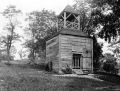
The old belfry in Lexington has been moved time and again, finally settling on the hill above the green.