File:Neth 1816 daalder 696.jpg
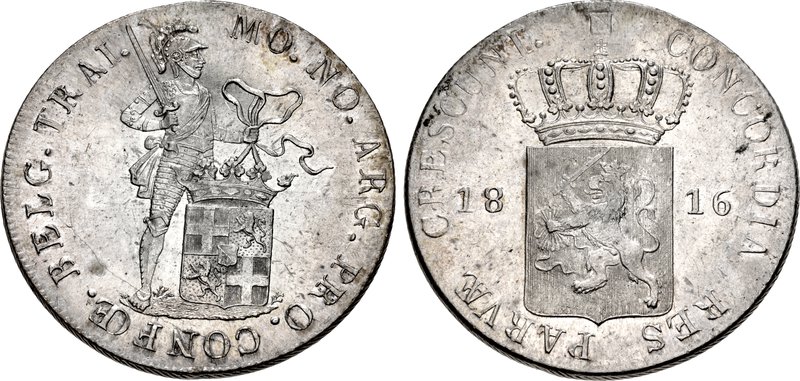
Neth_1816_daalder_696.jpg (800 × 381 pixels, file size: 104 KB, MIME type: image/jpeg)
This specimen was lot 696 in Classical Numismatic Group's sale of the Lissner Collection (Chicago, July 2014), where it sold for $__. The catalog description[1] noted,
"NETHERLANDS, Kingdom. Trade coinage. AR Rijksdaaler – Ducat (40mm, 28.27 g, 11h). Utrecht mint; muntmeesterteken: shield. Dated 1816. KM 46; Cr 78; Davenport 225; Schulman 235. In NGC encapsulation graded MS 63. Extremely rare two year type, very seldom seen especially in this superb condition. Light toning over fully frosted surfaces. Purchased from Jacques Schulman, April 1978.
The term trade coinage refers to those precious metal issues that were minted by a particular government for the purpose of trade beyond the boundaries of the issuing state. Because these issues were of a recognized fineness, they were employed as quasi-bullion to make large-scale purchases of goods and raw materials in countries where such transactions allowed for a greater value of goods and raw materials to be purchased. Trade coinage was particularly popular in Africa, the Middle East, and South East Asia where certain European coins continued to circulate there long after they were withdrawn from circulation in the home country.
Like the Venetian and Hungarian ducats, the Netherlands ducat (and, later, the rijksdaal[d]er) became a recognized trade coinage. Beginning in the late fifteenth century under Philip the Fair, the Low Countries began issuing gold ducats of a set weight and fineness, a standard that continued unchanged until the twentieth century. While earlier ducats derived their designs from the Spanish excelente, in 1586, the Dutch introduced what would become the standard design for all their trade coinage. Taking their inspiration from the then current Hungarian ducat, the Dutch modified the design to reflect their political aspirations that were then on the rise during the Eighty Years’ War (1568-1648). Furthermore, because the Dutch East India Company was at that same time in its infancy, this gold and silver trade coinage was widely recognized and accepted as far away as Asia and the Americas, thereby facilitating the expansion of the great Dutch overseas empire. Long after both the Dutch East India Company and the Kingdom of the Netherlands issued their own coinages, this Dutch trade coinage was still being minted – a symbol of economic stability and the long-standing influence of one of the world’s great international economic empires."
File history
Click on a date/time to view the file as it appeared at that time.
| Date/Time | Thumbnail | Dimensions | User | Comment | |
|---|---|---|---|---|---|
| current | 15:49, 8 February 2021 | | 800 × 381 (104 KB) | Pastakhov (talk | contribs) | This page contains material from http://www.coinfactswiki.com/wiki/File%3ANeth_1816_daalder_696.jpg |
You cannot overwrite this file.
File usage
The following page uses this file:
